
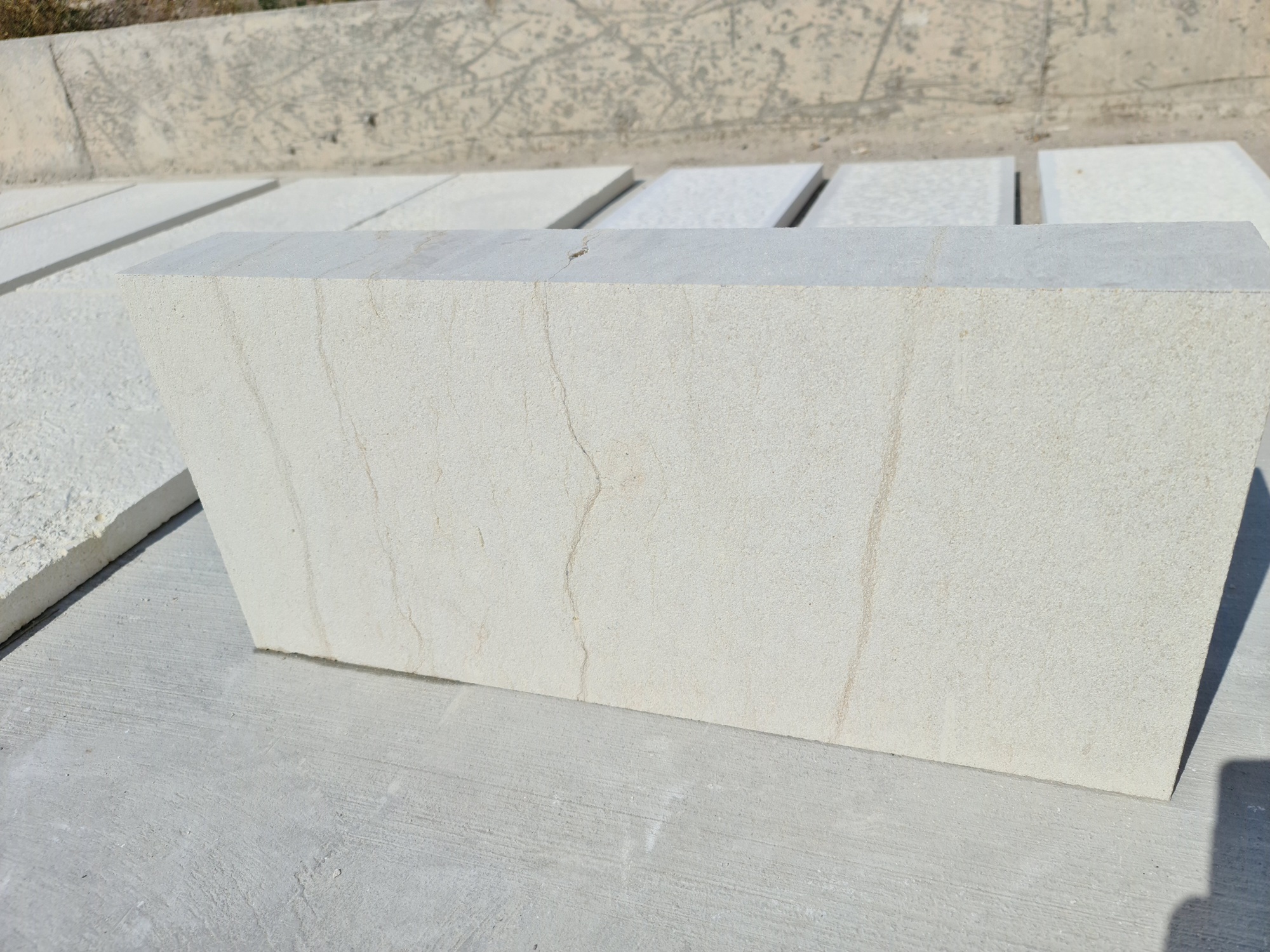
Honed Limestone for Architectural and Interior Projects
DMR Limestone manufactures and supplies premium honed limestone for residential, hospitality, commercial and custom architectural projects worldwide.
A honed finish creates a smooth, flat and low-reflective limestone surface without the high gloss associated with polished stone.
Its refined matte appearance makes honed limestone particularly suitable for:
- Interior flooring
- Interior wall cladding
- Hotel lobbies
- Villa interiors
- Restaurant floors
- Commercial reception areas
- Fireplace surrounds
- Staircases
- Window sills
- Door surrounds
- Large-format wall panels
- Bathroom walls
- Covered terraces
- Custom architectural elements
Honed limestone can be produced as:
- Tiles
- Slabs
- Large-format panels
- Cut-to-size flooring
- Wall panels
- Stair treads and risers
- Fireplace components
- Window sills
- Door and window surrounds
- Columns
- Capitals
- Wall caps
- Custom profiles
- CNC-fabricated elements
DMR Limestone works with architects, interior designers, contractors, hotel developers, villa builders, importers and stone distributors.
What Is Honed Limestone?
Honed limestone is natural limestone that has been mechanically ground and finished to create a smooth, matte or satin-like surface.
Unlike polished limestone, honed limestone does not have a highly reflective gloss.
The finish may range from:
- Soft matte
- Low sheen
- Fine satin
- Smooth non-polished
- Lightly reflective
- Fully flat and refined
The exact appearance depends on:
- Limestone type
- Pore structure
- Fossil content
- Abrasive sequence
- Final finishing level
- Filling method
- Lighting
- Sealer application
Honing changes the surface appearance but does not remove the stone’s natural characteristics.
Fossils, shell fragments, pores and tonal variation may remain visible after processing.
Is Honed Limestone a Stone Type or a Finish?
Honed limestone is a surface finish, not a separate geological stone category.
Different limestone materials can be supplied with a honed surface, including:
- White limestone
- Limra limestone
- Antalya limestone
- Beige limestone
- Cream limestone
- Fossil-rich limestone
Explore our material options:
- Turkish limestone
- Limra limestone
- White limestone
- Antalya limestone
- Beige limestone
The same limestone may look significantly different when honed, brushed, sandblasted or tumbled.
What Does Honed Limestone Look Like?
Honed limestone typically has:
- A smooth surface
- A matte or low-sheen finish
- Soft colour expression
- Visible natural fossils
- Refined architectural character
- Reduced light reflection
- Clean edges
- A contemporary appearance
Honing can make the stone appear calmer and more consistent than heavily textured finishes.
It can also reveal:
- Fine shell structures
- Subtle veins
- Sedimentary markings
- Small fossils
- Natural pores
- Colour variation
The final appearance should be reviewed through representative physical samples.
Why Choose Honed Limestone?
Honed limestone is widely selected for interiors because it combines a refined appearance with the natural character of stone.
Its principal advantages include:
- Elegant matte surface
- Soft and natural colour
- Compatibility with modern interiors
- Suitability for classical architecture
- Reduced glare compared with polished stone
- Availability in tiles and large panels
- Custom cut-to-size production
- Compatibility with underfloor heating systems
- Suitability for wall cladding
- Ability to create coordinated floors and walls
- CNC and edge-profile compatibility
- Natural fossil and shell detail
- Compatibility with multiple interior materials
Honed limestone should still be selected according to traffic, moisture, maintenance and slip-resistance requirements.
Honed Limestone Compared with Polished Limestone
Honed and polished limestone have different visual and practical characteristics.
Honed Limestone
Honed limestone generally has:
- A matte or low-sheen surface
- Softer light reflection
- A more natural appearance
- Less visual emphasis on surface gloss
- A contemporary and understated character
Polished Limestone
Polished limestone generally has:
- A glossy finish
- Stronger light reflection
- A deeper apparent colour
- More visible reflections
- A formal or decorative appearance
A polished finish may also make scratches, etching and traffic patterns more noticeable in some environments.
Honed limestone is often preferred where designers want the stone to feel natural rather than glossy.
Honed Limestone Compared with Brushed Limestone
Brushed limestone has a more tactile and lightly textured surface.
Honed limestone is generally:
- Smoother
- Flatter
- More refined
- More suitable for formal interiors
- Easier to integrate with minimalist design
Brushed limestone generally creates:
- A more textured appearance
- A softer aged character
- Greater tactile variation
- Stronger suitability for interior–exterior transitions
Honed Limestone Compared with Tumbled Limestone
Tumbled limestone typically has softened edges and an aged appearance.
Honed limestone generally creates:
- Cleaner joints
- Sharper edges
- A modern appearance
- A flatter surface
- Greater visual precision
Tumbled limestone generally creates:
- Rounded or softened edges
- A traditional appearance
- A rustic or Mediterranean character
- Greater variation between pieces
Honed Limestone Compared with Sandblasted Limestone
Sandblasted limestone has a visibly textured, non-reflective surface.
Honed limestone is generally more suitable for:
- Interior floors
- Interior walls
- Fireplaces
- Window sills
- Refined architectural elements
Sandblasted limestone is frequently considered for:
- Exterior paving
- Pool surrounds
- Exterior stairs
- Façades
- Garden pathways
Honed White Limestone
Honed white limestone creates a bright, clean and sophisticated surface.
It may be used for:
- Modern villa interiors
- Hotel lobbies
- Fireplace walls
- Large-format floors
- Interior wall panels
- Staircases
- Window sills
- Entrance halls
- Reception areas
The honed finish can reveal fine fossils, shell fragments and subtle natural texture.
Explore our white limestone page.
Honed Limra Limestone
Honed Limra limestone generally presents a smooth white to light cream appearance.
It may be suitable for:
- Interior flooring
- Hotel lobbies
- Villa interiors
- Wall panels
- Fireplace surrounds
- Stair treads
- Window sills
- Custom architectural stone
Explore our Limra limestone page.
Honed Antalya Limestone
Honed Antalya limestone may display:
- Warm white tones
- Off-white tones
- Light cream colours
- Fine fossils
- Natural pores
- Soft sedimentary details
It can be used for residential, hospitality and commercial interiors.
Visit our Antalya limestone page.
Honed Beige Limestone
Honed beige limestone creates a warm and refined interior atmosphere.
It works especially well with:
- Timber
- Bronze
- Brass
- Neutral fabrics
- Warm lighting
- Cream plaster
- Natural landscaping
- Contemporary furniture
Applications may include:
- Living rooms
- Hotel lobbies
- Restaurants
- Fireplace surrounds
- Reception areas
- Staircases
- Large-format floors
Explore our beige limestone page.
Honed Limestone Interior Flooring
Interior flooring is one of the most common applications for honed limestone.
It may be used in:
- Villa entrance halls
- Living rooms
- Dining rooms
- Hotel lobbies
- Restaurants
- Reception areas
- Offices
- Galleries
- Retail interiors
- Corridors
- Stair landings
- Covered courtyards
Honed limestone flooring can be produced as:
- Square tiles
- Rectangular tiles
- Large-format panels
- Random-length flooring
- Modular patterns
- French-pattern sets
- Border pieces
- Custom geometric panels
- Waterjet-cut designs
Visit our interior limestone flooring page.
Large-Format Honed Limestone Flooring
Large-format limestone panels can create a visually continuous surface with fewer joints.
They are suitable for:
- Luxury villas
- Hotel lobbies
- Commercial entrances
- Restaurants
- Galleries
- Open-plan living areas
- Reception spaces
Large-format flooring requires:
- A stable substrate
- Good substrate flatness
- Suitable stone thickness
- Professional handling
- Full bedding support
- Controlled lippage
- Movement joints
- Appropriate installation access
Honed Limestone Tiles
Honed limestone tiles may be supplied in:
- Standard square formats
- Rectangular formats
- Plank formats
- Modular sets
- Custom dimensions
- Random lengths
- French-pattern sets
Applications may include:
- Residential floors
- Hotel interiors
- Restaurant floors
- Office spaces
- Interior walls
- Covered terraces
- Selected bathroom applications
Visit our limestone tiles page.
Honed Limestone Slabs
Honed limestone slabs may be supplied for:
- Large floor panels
- Wall panels
- Fireplace walls
- Stair landings
- Reception desks
- Custom furniture
- Window sills
- Architectural components
- Further fabrication
Visit our limestone slabs page.
Honed Limestone Wall Cladding
Honed limestone can create calm, refined and low-reflective interior walls.
Applications may include:
- Feature walls
- Hotel lobbies
- Reception areas
- Fireplace walls
- Staircase walls
- Lift lobbies
- Restaurant interiors
- Retail spaces
- Television walls
- Spa walls
- Double-height interiors
Panel formats may include:
- Standard wall tiles
- Large-format panels
- Full-height panels
- Horizontal strips
- Vertical panels
- Book-matched layouts
- Curved panels
- Custom-cut wall modules
Explore our interior wall cladding page.
Honed Limestone Feature Walls
A honed limestone feature wall can create an understated architectural focal point.
Design options include:
- Large-format panels
- Full-height stone
- Horizontal modules
- Vertical panels
- Recessed joints
- Integrated lighting
- Fireplace integration
- Television recesses
- Bronze or timber trims
- Custom engraved logos
The honed surface works particularly well with indirect and grazing light.
Honed Limestone Fireplace Surrounds
Honed limestone is frequently selected for modern and classical fireplace designs.
It may be manufactured as:
- Minimal rectangular surrounds
- Jambs
- Headers
- Mantel shelves
- Hearths
- Corbels
- Friezes
- Overmantels
- Full-height fireplace walls
- Mitred fireplace panels
Visit our limestone fireplace surrounds page.
Firebox clearances, heat exposure, ventilation and applicable fire requirements must be reviewed by qualified project professionals.
Honed Limestone Stairs
Honed limestone may be manufactured for interior staircases.
Products may include:
- Stair treads
- Risers
- Landings
- Winder steps
- Curved steps
- Bullnose nosings
- Mitred steps
- Stair skirting
- Side cladding
- Anti-slip grooves
Visit our limestone stairs page.
Honed Limestone Stair Treads
Honed stair treads create a clean architectural appearance.
Edge options may include:
- Straight edge
- Pencil edge
- Chamfer
- Half bullnose
- Full bullnose
- Mitred drop face
- Custom profile
Slip resistance and edge safety should be assessed according to the staircase use and local requirements.
Anti-Slip Grooves in Honed Limestone
Where required, honed limestone stair treads may include:
- Single grooves
- Multiple parallel grooves
- Recessed strips
- Contrasting inserts
- Metal inserts
- Abrasive inserts
The groove design should consider:
- Stone thickness
- Edge distance
- Cleaning
- Visual appearance
- Applicable safety requirements
Honed Limestone Window Sills
Honed limestone is well suited to interior window sills because of its smooth and refined finish.
Sills may include:
- Straight edges
- Pencil edges
- Chamfers
- Bullnose profiles
- Side returns
- Horns
- Rebates
- Notches
- Custom mouldings
Exterior sills may also be honed, but weather exposure, slip, drainage and maintenance should be considered.
Visit our limestone window sills page.
Honed Limestone Door and Window Surrounds
Honed limestone may be used for:
- Interior door frames
- Entrance portals
- Window surrounds
- Architraves
- Jambs
- Lintels
- Thresholds
- Deep reveals
- Decorative mouldings
Explore our limestone door and window frames page.
Honed Limestone Columns
Honed limestone columns create a smooth and refined architectural surface.
Columns may be produced as:
- Round columns
- Square columns
- Smooth columns
- Fluted columns
- Tapered columns
- Column drums
- Half columns
- Pilasters
- Curved cladding sections
Visit our limestone columns page.
Honed Limestone Capitals
Honed limestone capitals may be manufactured in:
- Tuscan styles
- Doric styles
- Ionic styles
- Corinthian styles
- Composite styles
- Simplified modern designs
- Custom carved forms
Visit our limestone capitals page.
Complex capitals may combine CNC machining with hand refinement.
Honed Limestone Architectural Elements
Honed limestone can be used for custom architectural components such as:
- Columns
- Capitals
- Pilasters
- Door surrounds
- Window frames
- Cornices
- Mouldings
- Stair components
- Fireplace surrounds
- Carved panels
- Signs
- Logos
- Interior wall panels
Visit our architectural stone elements page.
Custom Cut-to-Size Honed Limestone
DMR Limestone manufactures honed limestone according to project-specific dimensions, thicknesses, edge profiles and fabrication requirements.
Custom production may include:
- Floor panels
- Wall panels
- Stair treads
- Risers
- Window sills
- Door surrounds
- Fireplace components
- Columns
- Capitals
- Curved pieces
- Mitred components
- Rebates
- Grooves
- Holes
- Cut-outs
- CNC engraving
Visit our custom cut-to-size limestone page.
Honed Limestone Edge Profiles
Available edge profiles may include:
- Straight edge
- Sawn edge
- Honed edge
- Pencil edge
- Chamfer
- Bevel
- Half bullnose
- Full bullnose
- Ogee
- Cove
- Custom moulded profile
The selected edge should reflect:
- Stone thickness
- Application
- Exposure
- Safety
- Visual design
- Installation method
Mitred Honed Limestone
Mitred fabrication can create the appearance of thick solid stone using separate panels.
Applications may include:
- Stair nosings
- Fireplace walls
- Entrance portals
- Window reveals
- Columns
- Shelves
- Benches
- Reception desks
Mitred pieces require accurate cutting, bonding and edge finishing.
Curved Honed Limestone
Honed limestone may be fabricated into curved components for:
- Columns
- Curved walls
- Reception desks
- Staircases
- Arches
- Fireplace surrounds
- Circular openings
- Decorative features
Production requires accurate radius and arc information.
CNC Honed Limestone Fabrication
CNC machinery may be used for:
- Profiling
- Grooving
- Rebating
- Drilling
- Curved cutting
- Lettering
- Logos
- Relief carving
- Three-dimensional components
- Repeated architectural elements
CNC processing supports repeatability and controlled dimensions.
Honed Limestone for Hotel Interiors
Hotels may use honed limestone for:
- Lobby floors
- Reception walls
- Lift lobbies
- Restaurants
- Guestroom corridors
- Fireplace walls
- Staircases
- Spa walls
- Suite bathrooms
- Decorative columns
Visit our hotel and resort projects page.
Honed Limestone for Luxury Villas
Luxury residences may use honed limestone for:
- Entrance halls
- Living-room floors
- Dining areas
- Staircases
- Fireplace walls
- Window sills
- Interior columns
- Bathroom walls
- Feature walls
- Covered terraces
Explore our luxury residential projects page.
Honed Limestone for Commercial Interiors
Commercial applications may include:
- Office lobbies
- Retail stores
- Restaurants
- Showrooms
- Corporate reception areas
- Galleries
- Cultural buildings
- Commercial staircases
Visit our commercial buildings page.
Can Honed Limestone Be Used Outdoors?
Honed limestone may be used in selected exterior applications, but it is generally associated more strongly with interiors.
Possible exterior uses may include:
- Covered terraces
- Protected entrance areas
- Exterior wall cladding
- Window sills
- Architectural details
- Selected façade panels
For exposed walking surfaces, the project should evaluate:
- Slip resistance
- Wet conditions
- Surface wear
- Weathering
- Freeze–thaw exposure
- Maintenance
- Algae growth
- Local regulations
Brushed or sandblasted finishes may be more appropriate for some exposed exterior walking areas.
Can Honed Limestone Be Used Around Pools?
Honed limestone should not automatically be selected for wet pool-deck surfaces without slip-resistance evaluation.
Pool areas require consideration of:
- Wet barefoot traffic
- Surface finish
- Slope
- Drainage
- Pool chemicals
- Cleaning
- Wear
- Sealer
- Local requirements
A more textured finish, such as brushed or sandblasted limestone, may be more suitable for exposed pool surrounds.
Visit our pool surrounds page.
Honed Limestone in Bathrooms
Honed limestone may be used in selected bathroom applications, including:
- Wall cladding
- Vanity walls
- Feature walls
- Dry floor areas
- Window sills
- Bath surrounds
Wet floors and shower areas require careful evaluation of:
- Slip resistance
- Waterproofing
- Drainage
- Cleaning products
- Ventilation
- Sealer compatibility
- Soap residue
- Maintenance
Limestone is not a substitute for a complete waterproofing system.
Honed Limestone and Slip Resistance
A honed surface is smooth and may become slippery under certain wet or contaminated conditions.
Slip resistance depends on:
- Limestone type
- Honing level
- Wet or dry use
- Surface wear
- Cleaning
- Contaminants
- Slope
- Footwear
- Barefoot traffic
- Sealer
Required slip-resistance performance should be defined by the project and verified through appropriate testing where necessary.
Honed Limestone and Underfloor Heating
Honed limestone may be compatible with properly designed underfloor-heating systems.
The system should consider:
- Substrate stability
- Screed curing
- Moisture content
- Adhesive compatibility
- Stone thickness
- Movement joints
- Heating cycles
- Maximum operating temperature
- Gradual commissioning
Natural stone installation guidance and system-manufacturer recommendations should be followed.
Honed Limestone Thicknesses
Possible thicknesses may include:
- 10 mm
- 12 mm
- 15 mm
- 20 mm
- 30 mm
- 40 mm
- 50 mm
- Greater custom thicknesses
Availability and suitability depend on:
- Limestone selection
- Product dimensions
- Application
- Support
- Traffic
- Edge profile
- Cut-outs
- Handling
- Installation method
- Engineering requirements
Not every product is suitable in every thickness.
Choosing the Correct Thickness
Thickness should be evaluated according to:
- Tile or panel dimensions
- Substrate
- Traffic
- Structural loads
- Point loads
- Edge details
- Cut-outs
- Stair spans
- Mechanical fixings
- Handling
- Installation conditions
Large-format flooring, stair treads, wall panels and window sills may require different thicknesses.
Honed Limestone Dimensional Tolerances
Production tolerances depend on:
- Product dimensions
- Thickness
- Limestone characteristics
- Edge profile
- Machinery
- Surface finish
- Installation requirements
Required tolerances should be agreed before production.
Natural stone should not be treated as a synthetic sheet material with no variation.
Honed Limestone Surface Consistency
The visual consistency of a honed surface may be influenced by:
- Stone density
- Fossils
- Pore distribution
- Abrasive progression
- Machine settings
- Filling
- Final cleaning
- Sealer application
Large projects should use approved reference samples to define the expected finish.
Light Honed and Fine Honed Limestone
Honing can be completed to different levels.
Light Honed Limestone
A light honed finish may retain:
- Slight abrasive texture
- Lower sheen
- More visible surface movement
- A softer, natural character
Fine Honed Limestone
A fine honed finish may provide:
- A smoother surface
- More refined colour
- Slightly increased sheen
- Greater clarity of fossils and markings
The required honing level should be established through samples.
Filled Honed Limestone
Natural pores may be filled before or during the honing process.
Filled honed limestone can create:
- A smoother surface
- Easier cleaning
- Reduced visible voids
- A more uniform tactile finish
Filling materials should be selected for:
- Colour compatibility
- Adhesion
- Interior or exterior exposure
- Maintenance
- Expected ageing
Unfilled Honed Limestone
Unfilled honed limestone retains more of its natural pore structure.
It may create:
- A more authentic stone appearance
- Greater tactile variation
- Visible natural voids
- A less uniform surface
Open pores may collect dirt or moisture more easily in some applications and should be considered during material selection.
Natural Variation in Honed Limestone
Honed limestone may naturally vary in:
- Colour
- Fossil distribution
- Shell fragments
- Pore size
- Sedimentary markings
- Veining
- Surface response
- Mineral details
Variation can be managed through:
- Block selection
- Range samples
- Slab photography
- Dry layouts
- Colour blending
- Zone-specific production
- Approved mock-ups
Complete artificial uniformity should not be expected.
Honed Limestone Technical Evaluation
Depending on the application, technical assessment may include:
- Water absorption
- Apparent density
- Open porosity
- Compressive strength
- Flexural strength
- Abrasion resistance
- Slip resistance
- Freeze–thaw resistance
- Stain sensitivity
- Anchor resistance
- Petrographic analysis
The honed finish does not determine all technical properties.
Performance depends primarily on the limestone itself, product dimensions and installation system.
Honed Limestone Water Absorption
Limestone is naturally porous.
Water absorption may affect:
- Staining
- Darkening when wet
- Sealer selection
- Cleaning
- Exterior use
- Freeze–thaw performance
- Installation
- Maintenance
A honed finish does not make limestone waterproof.
Honed Limestone and Staining
Potential staining sources include:
- Oil
- Wine
- Coffee
- Tea
- Food
- Cosmetics
- Construction materials
- Metal rust
- Plant matter
- Cleaning chemicals
Prompt cleaning, suitable sealing and appropriate maintenance can help reduce staining risk.
Honed Limestone and Acid Etching
Limestone contains calcium carbonate and is sensitive to acids.
Potential sources of etching include:
- Vinegar
- Lemon juice
- Wine
- Acidic cleaners
- Descaling products
- Certain bathroom cleaners
- Some construction chemicals
Acid etching may create:
- Dull marks
- Lightened areas
- Rough spots
- Loss of surface uniformity
Etching is a chemical change rather than a normal removable stain.
Does Honed Limestone Need Sealing?
A compatible breathable natural stone sealer may be considered depending on:
- Limestone type
- Pore structure
- Interior or exterior use
- Food and drink exposure
- Bathroom use
- Traffic
- Maintenance expectations
The sealer should:
- Be suitable for limestone
- Be tested on a sample
- Avoid undesirable colour changes
- Avoid creating excessive gloss
- Avoid increasing slipperiness
- Be compatible with the installation
- Be maintained according to manufacturer guidance
Sealing does not make limestone acid proof or completely stain proof.
Cleaning Honed Limestone
Recommended maintenance practices include:
- Use pH-neutral natural stone cleaners
- Remove dust and grit regularly
- Use soft cleaning tools
- Clean spills promptly
- Avoid acidic products
- Avoid vinegar
- Avoid abrasive powders
- Avoid harsh descaling chemicals
- Test cleaning products before full use
- Follow professional maintenance advice
Routine Floor Maintenance
For honed limestone flooring:
- Use entrance mats to reduce grit
- Vacuum or dust-mop regularly
- Clean with diluted pH-neutral stone cleaner
- Remove standing water
- Clean spills quickly
- Avoid dragging furniture
- Use protective pads beneath furniture
- Inspect joints periodically
Grit can act as an abrasive and gradually affect the surface.
Restoring Honed Limestone
Depending on the condition, honed limestone may sometimes be:
- Deep cleaned
- Re-honed
- Locally refinished
- Refilled
- Re-sealed
- Repaired
- Replaced
Professional restoration may be required for:
- Deep etching
- Scratches
- Uneven wear
- Failed filling
- Severe staining
- Lippage
- Installation damage
Honed Limestone Samples
Samples help evaluate:
- Colour
- Fossils
- Pores
- Surface smoothness
- Sheen level
- Filling
- Edge finish
- Sealer effect
- Natural variation
A single small sample may not represent the full range of a major project.
Representative range samples are recommended.
Full-Size Honed Limestone Mock-Ups
Mock-ups may include:
- Floor panels
- Wall panels
- Joints
- Edge profiles
- Sealers
- Grout colours
- Adjacent materials
- Lighting
- Cleaning methods
The approved mock-up can become the production and installation quality reference.
Dry Layout and Colour Blending
Selected honed limestone products may be dry laid before packing.
Suitable applications include:
- Large-format flooring
- Feature walls
- Fireplace surrounds
- Entrance halls
- Reception walls
- Custom patterns
Dry layouts can help verify:
- Colour distribution
- Fossil distribution
- Joint alignment
- Veining
- Panel orientation
- Piece numbering
- Overall appearance
Piece Numbering
Custom honed limestone pieces can be numbered according to:
- Building
- Floor
- Room
- Wall elevation
- Staircase
- Fireplace
- Window
- Door
- Installation sequence
- Crate number
Piece numbering supports organised installation.
Honed Limestone Production Process
A typical production process may include:
- Review of project requirements
- Limestone selection
- Material sampling
- Honing-level approval
- Colour-range approval
- Drawing and cutting-list review
- Block and slab selection
- Primary cutting
- Thickness calibration
- Surface honing
- Pore filling where required
- Re-honing after filling
- CNC fabrication
- Edge profiling
- Hole and rebate preparation
- Dimensional inspection
- Dry layout where required
- Piece numbering
- Packaging
- Crate-list preparation
Quality Control
Quality-control procedures may include:
- Block and slab inspection
- Colour-range review
- Honing-level comparison
- Fossil and pore assessment
- Length and width checks
- Thickness control
- Squareness checks
- Flatness review
- Surface-finish inspection
- Edge-profile verification
- Filling inspection
- Hole and rebate checks
- Piece-number control
- Packaging inspection
Packaging Honed Limestone
Honed limestone requires careful packaging to protect smooth finished surfaces and edges.
Packaging may include:
- Reinforced wooden crates
- Pallets
- A-frame supports
- Foam separators
- Protective sheets
- Edge guards
- Surface protection
- Corner protection
- Piece labels
- Crate lists
Finished faces should be protected from abrasion and uncontrolled contact during transport.
Installation-Sequence Packaging
Crates can be organised according to:
- Building
- Floor
- Room
- Wall
- Staircase
- Fireplace
- Product type
- Installation sequence
- Construction phase
This can improve site handling and reduce unnecessary unpacking.
Honed Limestone Installation
Installation should be completed by experienced natural stone contractors.
Depending on the application, installation may involve:
- Natural stone adhesive
- Mortar beds
- Mechanical anchors
- Support rails
- Dowels
- Waterproof membranes
- Movement joints
- Grout
- Sealants
- Levelling systems
The installation method depends on:
- Product dimensions
- Thickness
- Substrate
- Interior or exterior use
- Weight
- Moisture
- Traffic
- Engineering requirements
Substrate Preparation
The substrate should be:
- Stable
- Clean
- Properly cured
- Flat
- Structurally suitable
- Compatible with natural stone adhesive
- Free from contaminants
- Appropriately waterproofed where required
Poor substrate preparation can lead to lippage, cracking, debonding and uneven joints.
Movement Joints
Movement joints should be coordinated with:
- Building movement
- Structural joints
- Heated floors
- Large floor areas
- Changes in substrate
- Perimeters
- Doorways
- Changes in material
Movement joints should not be filled rigidly with stone or grout where flexible movement is required.
Grout Selection
Grout should be selected according to:
- Joint width
- Stone colour
- Pore structure
- Cleaning requirements
- Interior or exterior use
- Moisture exposure
- Staining risk
The grout should be tested on a sample before full installation.
Honed Limestone for Architects
DMR Limestone supports architects with:
- Material samples
- Honing-level samples
- Colour-range samples
- Large-format panel review
- Custom edge profiles
- Cut-to-size production
- Curved fabrication
- CNC machining
- Mock-up components
- Piece numbering
- Packaging planning
Visit our architects page.
Honed Limestone for Contractors
Contractors should provide:
- Architectural drawings
- Cutting lists
- Product dimensions
- Required thicknesses
- Honing level
- Edge profiles
- Quantities
- Installation location
- Project location
- Delivery destination
- Installation sequence
- Production programme
Visit our contractors page.
Honed Limestone for Hotel Developers
Hotel developers may source honed limestone for:
- Lobby floors
- Reception walls
- Restaurants
- Corridors
- Suites
- Staircases
- Fireplace walls
- Spa interiors
- Resort villas
Visit our hotel developers page.
Honed Limestone for Villa Builders
Villa builders may require honed limestone for:
- Entrance halls
- Living-room floors
- Staircases
- Fireplace walls
- Window sills
- Interior columns
- Bathrooms
- Feature walls
- Covered terraces
Visit our villa builders page.
Honed Limestone for Importers
Importers may source:
- Standard tiles
- Large-format floor panels
- Slabs
- Wall panels
- Stair components
- Window sills
- Fireplace components
- Custom cut-to-size stone
- Mixed-product containers
Visit our importers page.
Honed Limestone for Stone Distributors
Stone distributors may order:
- Tile collections
- Slabs
- Flooring
- Wall panels
- Fireplace components
- Stair treads
- Custom project stone
- Private-label products
- Mixed containers
Visit our stone distributors page.
Why Choose DMR Limestone for Honed Limestone?
DMR Limestone manufactures honed Turkish limestone for international residential, hospitality and commercial projects.
Our capabilities include:
- Honed white limestone
- Honed Limra limestone
- Honed Antalya limestone
- Honed beige limestone
- Floor tiles
- Large-format flooring
- Slabs
- Interior wall panels
- Stair components
- Window sills
- Fireplace surrounds
- Columns
- Capitals
- Door and window frames
- Custom architectural stone
- Cut-to-size production
- CNC fabrication
- Curved stone
- Mitred components
- Edge profiling
- Piece-numbered production
- Export-oriented packaging
From standard honed limestone tiles to complete villa, hotel and commercial interior packages, DMR Limestone can manufacture natural stone according to project-specific dimensions and design requirements.
Frequently Asked Questions About Honed Limestone
What is honed limestone?
Honed limestone is natural limestone finished with a smooth, matte or low-sheen surface.
Is honed limestone a type of limestone?
No. Honing is a surface finish that can be applied to different limestone materials.
Is honed limestone shiny?
It usually has a matte or low-sheen appearance rather than a high-gloss finish.
What is the difference between honed and polished limestone?
Honed limestone is matte and low reflective, while polished limestone has a glossy surface.
What is the difference between honed and brushed limestone?
Honed limestone is smoother and flatter. Brushed limestone has more texture and a softer aged appearance.
What is the difference between honed and tumbled limestone?
Honed limestone has clean edges and a smooth surface. Tumbled limestone generally has softened edges and a more rustic appearance.
Can white limestone be honed?
Yes. White limestone can be manufactured with a honed finish.
Can Limra limestone be honed?
Yes. Honed Limra limestone is suitable for floors, walls, fireplaces and custom interior elements.
Can beige limestone be honed?
Yes. Honed beige limestone creates a warm and refined interior appearance.
Is honed limestone suitable for interior flooring?
Yes. It is commonly used for residential, hotel, restaurant and commercial interior floors.
Can honed limestone be used for large-format floors?
Yes. Large-format panels can be produced subject to stone, thickness, weight and installation requirements.
Can honed limestone be used for wall cladding?
Yes. It can be manufactured as standard tiles, large panels and full-height interior wall components.
Can honed limestone be used for feature walls?
Yes. Honed panels can be combined with lighting, timber, bronze and custom architectural details.
Can honed limestone be used for fireplace surrounds?
Yes. It is suitable for modern, classical and full-height fireplace designs.
Can honed limestone be used for stairs?
Yes. Treads, risers, landings, curved steps and custom edge profiles can be produced.
Can anti-slip grooves be cut into honed stair treads?
Yes. Grooves and inserts can be produced according to approved details.
Can honed limestone be used for window sills?
Yes. It is frequently used for interior window sills and custom architectural details.
Can honed limestone be used for columns?
Yes. Round, square, smooth, fluted and custom columns can be honed.
Can honed limestone be used outdoors?
It may be used in selected exterior applications, but exposed walking surfaces require careful slip and weather evaluation.
Is honed limestone suitable for pool decks?
It should not be selected automatically for wet pool decks. Slip-resistance testing and project-specific evaluation are recommended.
Can honed limestone be used in bathrooms?
Yes, particularly for walls and selected dry areas. Wet floors require slip-resistance and waterproofing evaluation.
Is honed limestone slippery?
It can become slippery under wet or contaminated conditions. Performance depends on the material, honing level, wear, cleaning and slope.
Can honed limestone be used with underfloor heating?
Yes, when the substrate, adhesive, movement joints and heating system are professionally designed.
Does honed limestone contain fossils?
It may contain natural fossils and shell fragments depending on the limestone selection.
Are pores normal in honed limestone?
Yes. Natural pores may remain visible after honing.
Can honed limestone pores be filled?
Yes. Pores may be factory filled, partially filled or left open according to the specification.
What is filled honed limestone?
It is limestone whose natural pores have been filled and the surface re-honed to create a smoother finish.
What is unfilled honed limestone?
It retains more of the stone’s natural open-pore structure.
Can the honing level be customised?
Yes. A project may specify a lighter or finer honed finish subject to sample approval.
Can honed limestone be cut to custom dimensions?
Yes. Tiles, slabs, wall panels, stairs, sills, fireplace parts and architectural elements can be produced to size.
Can honed limestone be manufactured with custom edges?
Yes. Straight, pencil, chamfered, bullnose, ogee and custom profiles can be produced.
Can honed limestone be mitred?
Yes. Mitred steps, fireplace walls, entrance frames, shelves and other components can be fabricated.
Can curved honed limestone be produced?
Yes. Curved panels, columns, stairs and custom architectural components can be manufactured.
Can logos be engraved into honed limestone?
Yes. CNC engraving and custom lettering can be produced.
Which thicknesses are available?
Possible thicknesses range from thin tiles to thick custom architectural pieces. Suitability depends on the application.
Can exact colour uniformity be guaranteed?
No. Limestone is natural stone and may vary in colour, fossils, pores and markings.
Can honed limestone be colour blended?
Yes. Products can be blended according to room, floor, wall or building zone.
Can honed limestone be dry laid before shipment?
Yes. Selected floors, walls, fireplaces and custom components can be dry laid.
Can each piece be numbered?
Yes. Components can be numbered according to their installation position.
Does honed limestone need sealing?
A suitable breathable sealer may be considered depending on the stone, application and maintenance requirements.
Does sealing make limestone stain proof?
No. Sealing may reduce absorption but does not make limestone completely stain proof.
Is honed limestone acid resistant?
No. Limestone is sensitive to acids such as vinegar, lemon juice and acidic cleaners.
How should honed limestone be cleaned?
Use pH-neutral natural stone cleaners and avoid acidic or abrasive products.
Can scratches be removed from honed limestone?
Some surface scratches may be reduced through professional re-honing, depending on their depth.
Can etched honed limestone be repaired?
Professional refinishing may improve etched areas, depending on the extent of damage.
Can honed limestone be restored?
Yes. It may sometimes be cleaned, re-honed, refilled, resealed or locally repaired.
Should spare material be ordered?
Keeping spare material from the original production batch is recommended for future repairs and replacement.
Can full-size samples be supplied?
Yes. Full-size floor, wall, stair and edge-profile samples may be produced where included in the project scope.
Can technical test information be supplied?
Available technical information depends on the selected limestone and project requirements.
What information is required for a quotation?
Please provide:
- Required limestone type
- Product type
- Architectural drawings
- Dimensions
- Thicknesses
- Honing level
- Edge profiles
- Filling requirements
- Quantities
- Installation location
- Project location
- Delivery destination
- Production schedule
Request Honed Limestone Samples and Pricing
Are you planning a villa, hotel, restaurant, office, retail, interior or custom architectural project?
Contact DMR Limestone to request:
- Honed Turkish limestone samples
- Honed white limestone
- Honed Limra limestone
- Honed Antalya limestone
- Honed beige limestone
- Colour-range samples
- Honing-level samples
- Filled and unfilled samples
- Honed limestone tiles
- Honed limestone slabs
- Large-format flooring
- Interior wall panels
- Stair components
- Window sills
- Door and window surrounds
- Fireplace surrounds
- Columns and capitals
- Custom architectural elements
- Cut-to-size production
- CNC fabrication
- Curved stone production
- Mitred fabrication
- Piece-numbered packaging
- Project-specific pricing
Send us your project drawings, required dimensions, limestone colour, honing level, quantities and delivery destination to receive a customised honed limestone quotation.