

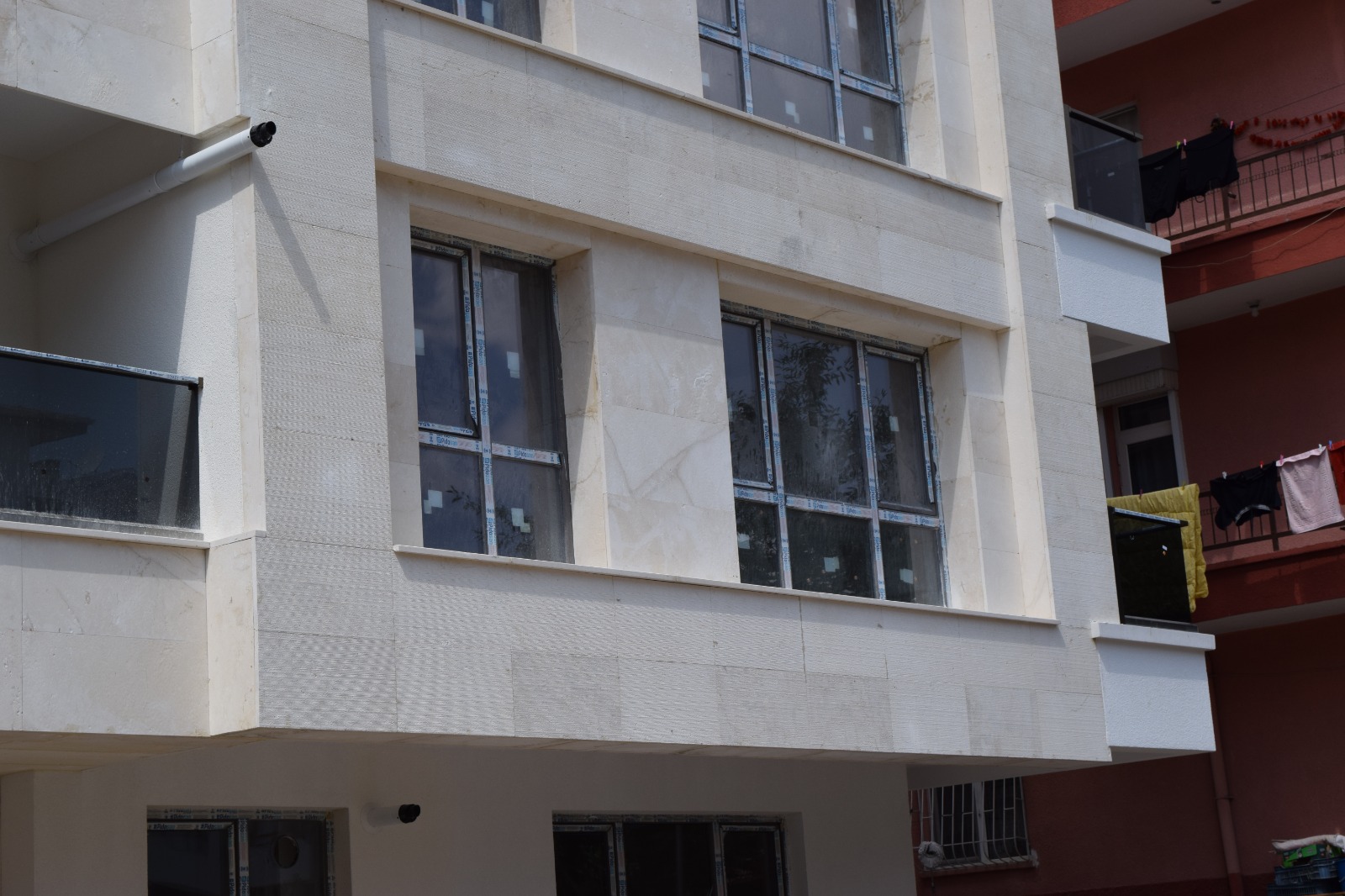
Turkish Limestone for Architectural and Landscape Projects
DMR Limestone supplies premium Turkish limestone for residential, hospitality, commercial, landscape and restoration projects worldwide.
Produced from selected limestone quarried in Turkey, our natural stone can be manufactured as standard products or project-specific architectural components.
Our Turkish limestone range is suitable for:
- Exterior wall cladding
- Façade panels
- Interior wall cladding
- Interior flooring
- Exterior paving
- Pool surrounds
- Pool coping
- Garden pathways
- Staircases
- Window sills
- Door and window surrounds
- Columns
- Capitals
- Balustrades
- Fireplace surrounds
- Wall caps
- Pier caps
- Cornices
- Carved architectural elements
- Restoration components
- Custom cut-to-size stone
DMR Limestone works with:
- Architects
- Contractors
- Hotel developers
- Villa builders
- Landscape designers
- Importers
- Stone distributors
- Façade companies
- Interior designers
- Pool contractors
- Restoration specialists
Our production can be based on architectural drawings, cutting lists, shop drawings, schedules, physical templates, CAD files and three-dimensional models.
What Is Turkish Limestone?
Turkish limestone is natural sedimentary stone quarried in different regions of Turkey.
It is formed primarily from calcium carbonate and may contain natural characteristics such as:
- Fossils
- Shell fragments
- Fine pores
- Sedimentary lines
- Tonal variation
- Mineral markings
- Natural voids
- Subtle veining
These features give limestone its authentic architectural character.
Turkish limestone is available in a range of colours, including:
- White
- Off-white
- Light cream
- Warm cream
- Beige
- Light grey-beige
Its colour, texture, porosity and fossil content vary according to the quarry and geological formation.
Why Is Turkish Limestone Used in Architecture?
Turkish limestone is widely used in international architecture because it combines natural appearance with strong fabrication potential.
Its main advantages include:
- Light and elegant colour options
- Suitability for modern and classical architecture
- Availability in blocks, slabs and tiles
- Compatibility with CNC fabrication
- Ability to receive different surface finishes
- Suitability for carving and profiling
- Availability for large architectural projects
- Compatibility with interior and exterior applications
- Custom cut-to-size production
- International export availability
- Coordination across façades, floors, pools and landscapes
The correct limestone should be selected according to the application, climate, traffic, moisture exposure and fixing system.
Turkish Limestone Quarrying
Turkey has a well-established natural stone industry supported by:
- Limestone quarries
- Block extraction
- Slab processing
- Tile production
- CNC fabrication
- Surface-finishing facilities
- Architectural stone workshops
- Export packaging
- International shipping experience
Limestone blocks are selected according to factors such as:
- Colour
- Fossil content
- Structural soundness
- Block dimensions
- Pore structure
- Natural markings
- Intended product
- Required finish
Large architectural elements may require larger and more consistent blocks than standard tiles or small pavers.
Turkish White Limestone
Turkish white limestone is frequently selected for modern and luxury architectural projects.
Its light colour can create:
- Bright façades
- Refined pool areas
- Minimalist interiors
- Elegant villas
- Contemporary hotels
- Clean landscape designs
- Timeless commercial buildings
White limestone works especially well with:
- Glass
- Timber
- Bronze
- Black aluminium
- Steel
- White render
- Neutral interiors
- Green landscaping
- Blue swimming pools
Explore our white limestone page.
Limra Limestone
Limra limestone is one of Turkey’s best-known light-coloured architectural limestones.
It is quarried in the Antalya region and generally has a white to light cream appearance.
Limra limestone may be used for:
- Façade cladding
- Exterior wall panels
- Interior wall cladding
- Flooring
- Window sills
- Door surrounds
- Columns
- Capitals
- Balustrades
- Fireplaces
- Pool coping
- Architectural carvings
Its fine architectural appearance makes it suitable for both contemporary and traditional design.
Explore our Limra limestone page.
Antalya Limestone
The Antalya region is internationally known for light-coloured limestone production.
Antalya limestone may include stones with:
- White tones
- Light cream tones
- Fine fossil structures
- Natural shell markings
- Architectural workability
- Suitability for façade and custom stone production
Applications may include:
- Villas
- Hotels
- Resorts
- Commercial façades
- Pool landscapes
- Interior architecture
- Classical architectural elements
- Restoration components
Visit our Antalya limestone page.
Turkish Beige Limestone
Turkish beige limestone provides a warmer and more traditional appearance.
It may be used for:
- Mediterranean villas
- Country houses
- Courtyards
- Hotels
- Restaurants
- Garden pathways
- Exterior walls
- Interior flooring
- Fireplaces
- Classical architecture
Beige limestone complements:
- Timber
- Terracotta
- Bronze
- Warm plaster colours
- Natural landscaping
- Traditional furniture
- Rustic-modern interiors
Explore our beige limestone page.
Turkish Limestone for Exterior Wall Cladding
Turkish limestone can be manufactured as exterior cladding for:
- Villas
- Hotels
- Resorts
- Offices
- Retail buildings
- Restaurants
- Cultural buildings
- Mixed-use developments
- Entrance walls
- Landscape structures
Exterior products may include:
- Standard rectangular panels
- Large-format panels
- Horizontal cladding
- Vertical panels
- Rusticated stone
- Curved panels
- Corner pieces
- Entrance surrounds
- Soffit stone
- Podium cladding
Explore:
- Exterior wall cladding
- Limestone wall cladding
- Limestone facade panels
Turkish Limestone Façades
A complete limestone façade may include:
- Main wall panels
- Window surrounds
- Window sills
- Door frames
- Cornices
- Quoins
- String courses
- Columns
- Capitals
- Balustrades
- Parapet coping
Façade design should consider:
- Stone thickness
- Panel dimensions
- Wind loads
- Seismic conditions
- Mechanical fixing
- Joint design
- Drainage
- Thermal movement
- Waterproofing
- Local building regulations
DMR Limestone manufactures stone according to approved project drawings but does not replace façade or structural engineering.
Turkish Limestone for Villa Façades
Turkish limestone is frequently selected for luxury villa architecture because it can coordinate the building and landscape.
A villa stone package may include:
- Façade panels
- Entrance portals
- Window surrounds
- Window sills
- Columns
- Balustrades
- Exterior stairs
- Pool coping
- Pavers
- Wall caps
- Pier caps
- Fireplace surrounds
Visit our villa facades and luxury residential projects pages.
Turkish Limestone for Hotels and Resorts
Hotels and resorts may use Turkish limestone across:
- Main façades
- Entrance areas
- Lobbies
- Restaurants
- Spas
- Guestroom corridors
- Resort villas
- Swimming pools
- Courtyards
- Garden pathways
- Landscape walls
A coordinated natural stone package can create visual consistency between architecture and landscape.
Visit our hotel and resort projects page.
Turkish Limestone for Commercial Buildings
Commercial applications may include:
- Office façades
- Retail entrances
- Showrooms
- Restaurants
- Corporate headquarters
- Mixed-use developments
- Cultural buildings
- Public reception areas
- Commercial plazas
Visit our commercial buildings page.
Turkish Limestone for Interior Flooring
Turkish limestone can create a calm and refined interior floor.
Applications include:
- Villa entrance halls
- Living rooms
- Dining rooms
- Hotel lobbies
- Restaurants
- Offices
- Retail spaces
- Corridors
- Stair landings
- Covered courtyards
Flooring can be manufactured as:
- Square tiles
- Rectangular tiles
- Large-format panels
- Random-length flooring
- Modular patterns
- French-pattern sets
- Borders
- Inlays
- Custom geometric panels
Explore our interior limestone flooring and limestone tiles pages.
Turkish Limestone for Interior Wall Cladding
Interior wall applications may include:
- Feature walls
- Fireplace walls
- Hotel lobbies
- Reception areas
- Staircase walls
- Restaurant interiors
- Retail spaces
- Lift lobbies
- Spa walls
- Television walls
Panels may be:
- Honed
- Brushed
- Sandblasted
- Chiselled
- Fluted
- Grooved
- Split face
- CNC carved
- Large format
- Full height
Visit our interior wall cladding page.
Turkish Limestone Feature Walls
Limestone feature walls can be designed using:
- Large-format panels
- Horizontal strips
- Vertical panels
- Random-length pieces
- Three-dimensional reliefs
- Carved panels
- Fluted stone
- Chiselled stone
- Integrated lighting
- Custom logos
The surface finish and panel layout should be selected according to lighting, maintenance and interior style.
Turkish Limestone Slabs
Limestone slabs can be used for:
- Large-format flooring
- Interior wall panels
- Fireplace walls
- Stair landings
- Custom furniture
- Reception desks
- Large architectural panels
- Cut-to-size components
Visit our limestone slabs page.
Turkish Limestone Tiles
Turkish limestone tiles may be supplied for:
- Interior flooring
- Interior wall cladding
- Bathrooms
- Hotel rooms
- Restaurants
- Courtyards
- Covered terraces
- Commercial interiors
Possible formats include:
- Square tiles
- Rectangular tiles
- Plank formats
- Modular sets
- Random lengths
- Custom dimensions
Visit our limestone tiles page.
Turkish Limestone Pavers
Turkish limestone pavers may be used for:
- Terraces
- Patios
- Pool decks
- Courtyards
- Garden paths
- Hotel landscapes
- Entrance plazas
- Outdoor dining areas
- Commercial walkways
Available formats may include:
- Square pavers
- Rectangular pavers
- Large-format pavers
- Modular patterns
- Random lengths
- Stepping stones
- Curved pieces
- Border stones
Visit our limestone pavers page.
Turkish Limestone Pool Coping
Turkish limestone can be manufactured for swimming pool edges and surrounding landscapes.
Pool products may include:
- Bullnose coping
- Half-bullnose coping
- Straight-edge coping
- Drop-face coping
- Curved coping
- Radius corners
- Infinity-pool components
- Overflow-channel pieces
- Pool-deck pavers
- Drain covers
Explore:
- Limestone pool coping
- Pool surrounds
Turkish Limestone Garden Pathways
Garden paths may use:
- Large stepping stones
- Rectangular pavers
- Random-length paving
- Tumbled limestone
- Sandblasted paving
- Circular stepping stones
- Curved path pieces
- Border stones
- Garden steps
Visit our garden pathways page.
Turkish Limestone for Landscape Architecture
Landscape applications may include:
- Pool decks
- Garden walls
- Wall caps
- Planter coping
- Pier caps
- Stairs
- Benches
- Water features
- Pavilions
- Courtyards
- Entrance monuments
Explore our landscape architecture page.
Turkish Limestone Stairs
Turkish limestone can be manufactured for interior and exterior staircases.
Products may include:
- Stair treads
- Risers
- Landings
- Solid block steps
- Curved steps
- Winder steps
- Bullnose nosings
- Mitred steps
- Anti-slip grooves
- Stair skirting
Visit our limestone stairs page.
Turkish Limestone Window Sills
Window sills may include:
- Sloped surfaces
- Drip grooves
- Front overhangs
- Side returns
- Horns
- Rebates
- Notches
- Custom front profiles
- Curved pieces
Visit our limestone window sills page.
Turkish Limestone Door and Window Frames
Custom door and window components may include:
- Jambs
- Lintels
- Architraves
- Thresholds
- Keystones
- Arched heads
- Pediments
- Deep reveals
- Corner blocks
- Decorative mouldings
Explore our limestone door and window frames page.
Turkish Limestone Columns
Limestone columns may be manufactured as:
- Round columns
- Square columns
- Fluted columns
- Smooth columns
- Tapered columns
- Column drums
- Half columns
- Pilasters
- Curved cladding segments
- Decorative columns
Visit our limestone columns page.
Turkish Limestone Capitals
Capital designs may include:
- Tuscan
- Doric
- Ionic
- Corinthian
- Composite
- Modern simplified capitals
- Floral designs
- Custom reproductions
Explore our limestone capitals page.
Turkish Limestone Balustrades
Balustrade systems may include:
- Turned balusters
- Square balusters
- Top rails
- Bottom rails
- Newel posts
- Stair rails
- Curved rails
- Post caps
Visit our limestone balustrades page.
The complete balustrade must be professionally engineered to comply with applicable safety and structural requirements.
Turkish Limestone Fireplace Surrounds
Fireplace surrounds may be designed in:
- Modern styles
- Minimalist styles
- Classical styles
- Mediterranean styles
- Traditional styles
- Custom carved designs
Products may include:
- Jambs
- Headers
- Mantel shelves
- Hearths
- Corbels
- Friezes
- Overmantels
- Full-height fireplace walls
Visit our limestone fireplace surrounds page.
Turkish Limestone Wall Caps
Wall caps may be manufactured as:
- Flat caps
- Single-slope caps
- Double-slope caps
- Saddleback coping
- Bullnose caps
- Moulded coping
- Curved wall caps
- Seating wall caps
Visit our limestone wall caps page.
Turkish Limestone Pier Caps
Pier-cap options may include:
- Flat caps
- Pyramid caps
- Hipped caps
- Moulded caps
- Round caps
- Finial-ready caps
- Lighting-ready caps
- Carved caps
Visit our limestone pier caps page.
Turkish Limestone Architectural Elements
Custom architectural elements may include:
- Columns
- Capitals
- Pilasters
- Cornices
- Mouldings
- Pediments
- Quoins
- Arches
- Keystones
- Balustrades
- Stair components
- Carved panels
- Crests
- Logos
- Signs
- Landscape elements
Visit our architectural stone elements page.
Turkish Limestone for Restoration Projects
Turkish limestone may be used to reproduce damaged or missing components in restoration projects.
Possible products include:
- Replacement façade panels
- Window sills
- Door surrounds
- Cornices
- Columns
- Capitals
- Balusters
- Stair treads
- Fireplace components
- Carved details
- Wall caps
- Pier caps
Production may be based on original samples, templates, drawings, photographs or three-dimensional scans.
Visit our restoration projects page.
Custom Cut-to-Size Turkish Limestone
DMR Limestone manufactures limestone according to project-specific dimensions, thicknesses, finishes and profiles.
Custom fabrication may include:
- Large panels
- Curved panels
- Stair components
- Window sills
- Door surrounds
- Pool coping
- Wall caps
- Fireplace pieces
- Columns
- Capitals
- Balustrades
- Cornices
- Carved elements
- Fixing holes
- Anchor slots
- Rebates
- Grooves
Visit our custom cut-to-size limestone page.
Turkish Limestone Surface Finishes
The final appearance and performance of limestone are strongly influenced by its surface finish.
Honed Turkish Limestone
Honed limestone has a smooth, matte appearance.
It is suitable for:
- Interior flooring
- Wall panels
- Fireplace surrounds
- Window sills
- Hotel lobbies
- Residential interiors
- Refined architectural elements
Tumbled Turkish Limestone
Tumbled limestone has softened edges and an aged appearance.
It may be used for:
- Mediterranean flooring
- Garden pathways
- Courtyards
- Rustic interiors
- Traditional villas
- Landscape paving
Brushed Turkish Limestone
Brushed limestone has a lightly textured and natural surface.
It may be used for:
- Pool decks
- Exterior paving
- Courtyards
- Interior–exterior transitions
- Wall cladding
- Landscape applications
Sandblasted Turkish Limestone
Sandblasted limestone has a textured, non-reflective surface.
It is frequently considered for:
- Exterior façades
- Pool surrounds
- Garden paths
- Exterior stairs
- Commercial walkways
- Wall caps
Bush-Hammered Limestone
Bush hammering creates a stronger and more consistent texture.
It may be used for:
- Exterior stairs
- High-traffic paving
- Commercial landscapes
- Building bases
- Entrance plazas
Chiselled Limestone
Chiselled limestone has visible directional or hand-tooled marks.
It may be used for:
- Feature walls
- Columns
- Fireplace walls
- Façade bands
- Landscape walls
- Restoration projects
Sawn Limestone
Sawn limestone retains visible machine-cut texture.
It may be supplied as a finished architectural surface or for further processing.
Choosing the Correct Limestone Finish
The finish should be selected according to:
- Interior or exterior use
- Wet or dry conditions
- Pedestrian traffic
- Barefoot traffic
- Slip resistance
- Cleaning
- Climate
- Desired appearance
- Maintenance expectations
A finish that appears rough is not automatically compliant with every slip-resistance requirement.
Project-specific testing may be necessary.
Turkish Limestone Colours and Natural Variation
Turkish limestone is a natural material and may vary in:
- Colour
- Fossil content
- Shell distribution
- Pore structure
- Sedimentary lines
- Veining
- Natural markings
Complete artificial uniformity should not be expected.
For larger projects, colour selection may be managed through:
- Approved samples
- Range samples
- Block selection
- Slab photography
- Dry layouts
- Colour blending
- Zone-specific production
- Mock-ups
Fossils and Shell Fragments
Many limestone materials contain natural marine fossils and shell fragments.
These may appear as:
- Small circular fossils
- Shell shapes
- Fine white markings
- Darker fossil details
- Broken shell patterns
- Sedimentary textures
These characteristics help distinguish natural limestone from manufactured materials.
Natural Pores
Limestone may contain natural pores or small voids.
Depending on the product and finish, pores may be:
- Left open
- Factory filled
- Partially filled
- Filled during installation
- Accepted as part of the natural surface
The expected finish should be confirmed through physical samples.
Turkish Limestone Thicknesses
Possible thicknesses may include:
- 10 mm
- 12 mm
- 15 mm
- 20 mm
- 30 mm
- 40 mm
- 50 mm
- Greater custom thicknesses
Suitability depends on:
- Stone type
- Product dimensions
- Application
- Structural support
- Traffic
- Fixing method
- Edge profile
- Climate
- Handling
- Engineering requirements
Not every limestone or product is suitable in every thickness.
Turkish Limestone Panel Sizes
Panel dimensions depend on:
- Quarry block size
- Slab dimensions
- Stone structure
- Required thickness
- Fixing method
- Transport
- Site access
- Installation equipment
- Architectural layout
Large-format panels should be reviewed for weight, handling and mechanical support.
Dimensional Tolerances
Required tolerances should be defined before production.
They may depend on:
- Product dimensions
- Thickness
- Finish
- Edge profile
- Installation method
- Machinery
- Natural stone characteristics
Natural stone should not be treated as a synthetic material with no dimensional or visual variation.
Turkish Limestone Technical Evaluation
Depending on the project, technical assessment may include:
- Water absorption
- Apparent density
- Open porosity
- Compressive strength
- Flexural strength
- Abrasion resistance
- Freeze–thaw resistance
- Salt crystallisation
- Anchor resistance
- Slip resistance
- Petrographic analysis
Required test methods and acceptance values should be defined by the project specification and qualified professionals.
Water Absorption
Limestone is naturally porous.
Water absorption may influence:
- Exterior durability
- Freeze–thaw performance
- Staining
- Salt exposure
- Sealer selection
- Installation
- Maintenance
Material suitability should be assessed for the intended environment.
Freeze–Thaw Environments
Projects in cold climates should consider:
- Stone saturation
- Freeze–thaw performance
- Drainage
- Joint design
- Base preparation
- Snow
- Ice
- De-icing chemicals
- Water trapped behind panels
Good material selection must be supported by correct installation and water management.
Hot Climates
Hot-climate projects should consider:
- Thermal movement
- Strong sunlight
- Surface temperature
- Expansion joints
- Dust
- Pool chemicals
- Irrigation
- Cleaning
Light-coloured Turkish limestone is frequently selected for warm-climate architecture because of its bright appearance.
Coastal Environments
Coastal projects may expose limestone to:
- Salt spray
- High humidity
- Wind-driven rain
- Salt deposits
- Corroding metal components
- Frequent wetting and drying
The project should consider:
- Suitable limestone selection
- Corrosion-resistant fixings
- Drainage
- Regular rinsing
- Joint maintenance
- Cleaning access
Turkish Limestone and Slip Resistance
Slip resistance should be evaluated for:
- Pool decks
- Exterior stairs
- Garden pathways
- Entrances
- Bathrooms
- Indoor pool areas
- Commercial floors
- Restaurant floors
Required performance depends on:
- Wet or dry use
- Barefoot or footwear traffic
- Surface finish
- Slope
- Cleaning
- Wear
- Local regulations
Turkish Limestone and Underfloor Heating
Selected limestone can be compatible with properly designed underfloor-heating systems.
The design should consider:
- Screed curing
- Subfloor moisture
- Adhesive compatibility
- Stone thickness
- Movement joints
- Heating cycles
- Maximum operating temperature
- Gradual commissioning
Visit our interior limestone flooring page.
Limestone Sealing
A breathable natural stone sealer may be considered depending on:
- Stone type
- Surface finish
- Interior or exterior use
- Pool exposure
- Food and drink exposure
- Pollution
- Maintenance requirements
The sealer should:
- Be suitable for limestone
- Be tested on a sample
- Avoid unwanted colour change
- Avoid excessive slipperiness
- Be compatible with the installation
- Be maintained according to manufacturer guidance
Sealing does not make limestone acid proof or completely stain proof.
Cleaning Turkish Limestone
Recommended maintenance practices include:
- Use pH-neutral natural stone cleaners
- Remove dust and grit regularly
- Clean spills promptly
- Avoid acidic products
- Avoid vinegar
- Avoid harsh descaling chemicals
- Keep drainage clear
- Inspect joints and sealants
- Test cleaning products before use
- Avoid uncontrolled aggressive pressure washing
Acidic substances can etch limestone.
Turkish Limestone and Acid Etching
Limestone contains calcium carbonate and is sensitive to acid.
Potential sources of etching include:
- Vinegar
- Lemon juice
- Wine
- Acidic cleaners
- Descaling products
- Some pool chemicals
- Some construction cleaners
Etching is a chemical surface change and may require professional refinishing.
Project Samples
Material samples can help evaluate:
- Colour
- Fossils
- Pores
- Surface finish
- Edge treatment
- Filling
- Sealer effect
- Natural variation
A single small sample may not represent the full range of a large project.
Range samples and mock-ups are recommended for important architectural work.
Full-Size Mock-Ups
A project mock-up may include:
- Stone panels
- Joints
- Fixings
- Corners
- Surface finish
- Sealants
- Adjacent materials
- Lighting
- Cleaning method
The approved mock-up can become the quality reference for production and installation.
Colour Blending
Stone can be blended according to:
- Building
- Elevation
- Floor
- Room
- Villa
- Pool
- Landscape zone
- Installation phase
- Approved sample range
Blending helps distribute natural variation across the completed project.
Piece Numbering
Custom components can be numbered according to:
- Building
- Elevation
- Floor
- Room
- Window
- Door
- Staircase
- Pool
- Landscape zone
- Installation sequence
- Crate number
Piece numbering is especially useful for custom cut-to-size and multi-building projects.
Production Process
A typical Turkish limestone project may include:
- Review of architectural requirements
- Limestone selection
- Sample preparation
- Surface-finish approval
- Colour-range approval
- Drawing and cutting-list review
- Block and slab selection
- Primary cutting
- Thickness calibration
- Surface finishing
- CNC fabrication
- Edge profiling
- Hole and anchor preparation
- Carving where required
- Dimensional inspection
- Dry layout or trial assembly
- Piece numbering
- Packaging
- Crate-list preparation
Quality Control
Quality-control procedures may include:
- Block and slab inspection
- Colour-range review
- Dimension checks
- Thickness control
- Squareness checks
- Flatness review
- Surface-finish inspection
- Edge-profile verification
- Hole and rebate inspection
- Curved-radius checks
- Carving review
- Piece-number control
- Packaging inspection
Export Packaging
Packaging may include:
- Reinforced wooden crates
- Pallets
- A-frame supports
- Vertical panel frames
- Foam separators
- Edge protectors
- Surface protection
- Carving supports
- Bullnose protection
- Piece labels
- Crate lists
Packaging by Installation Zone
Crates can be organised by:
- Building
- Elevation
- Floor
- Room
- Villa
- Swimming pool
- Landscape area
- Product type
- Installation sequence
- Construction phase
This can improve site organisation and reduce unnecessary handling.
International Shipping
Shipment planning should consider:
- Product weight
- Crate dimensions
- Container capacity
- Transport route
- Port limitations
- Site unloading
- Crane access
- Storage
- Installation sequence
Large-format, curved, carved and solid stone components may require special handling.
Turkish Limestone for Architects
DMR Limestone supports architects with:
- Material samples
- Surface-finish samples
- Panel-size review
- Custom profiles
- Large-format production
- Curved fabrication
- CNC processing
- Mock-up components
- Piece numbering
- Packaging planning
Visit our architects page.
Turkish Limestone for Contractors
Contractors should provide:
- Architectural drawings
- Cutting lists
- Product dimensions
- Thicknesses
- Surface finishes
- Edge profiles
- Fixing requirements
- Quantities
- Project location
- Delivery destination
- Installation sequence
- Production programme
Visit our contractors page.
Turkish Limestone for Hotel Developers
Hotel developers may source coordinated limestone for:
- Façades
- Entrances
- Lobbies
- Restaurants
- Spas
- Pools
- Resort villas
- Courtyards
- Landscapes
Visit our hotel developers page.
Turkish Limestone for Landscape Designers
Landscape designers can specify Turkish limestone for:
- Pavers
- Pool coping
- Garden paths
- Steps
- Wall caps
- Planters
- Benches
- Water features
- Entrance monuments
Visit our landscape designers page.
Turkish Limestone for Villa Builders
Villa builders may require complete stone packages including:
- Façade cladding
- Window sills
- Entrance frames
- Flooring
- Stairs
- Fireplaces
- Pool coping
- Pavers
- Wall caps
- Landscape elements
Visit our villa builders page.
Turkish Limestone for Importers
Importers may source:
- Tiles
- Slabs
- Pavers
- Cladding
- Pool coping
- Stairs
- Window sills
- Fireplace components
- Architectural elements
- Mixed-product containers
Visit our importers page.
Turkish Limestone for Stone Distributors
Stone distributors can order:
- Standard tile collections
- Slabs
- Pavers
- Wall cladding
- Pool products
- Custom project stone
- Private-label collections
- Mixed containers
Visit our stone distributors page.
Why Choose DMR Limestone?
DMR Limestone supplies Turkish limestone for international architectural and landscape projects.
Our capabilities include:
- Turkish white limestone
- Limra limestone
- Beige limestone
- Tiles
- Slabs
- Pavers
- Façade panels
- Interior wall panels
- Flooring
- Pool coping
- Stair components
- Window sills
- Door and window frames
- Columns
- Capitals
- Balustrades
- Fireplace surrounds
- Wall caps
- Pier caps
- Cornices
- Carved stone
- Custom cut-to-size production
- CNC fabrication
- Surface finishing
- Piece-numbered manufacturing
- Export-oriented packaging
From standard tile and paving orders to complete villa, hotel, commercial and restoration packages, DMR Limestone can manufacture coordinated natural stone according to project-specific requirements.
Frequently Asked Questions About Turkish Limestone
What is Turkish limestone?
Turkish limestone is natural sedimentary stone quarried in Turkey and used for flooring, cladding, paving, pools and architectural elements.
What colours are available?
Turkish limestone is available in white, off-white, cream, beige and selected light grey-beige tones.
What is Turkish white limestone?
It is light-coloured limestone quarried in Turkey and commonly used for modern façades, villas, hotels, pools and interior architecture.
What is Limra limestone?
Limra is a white to light cream limestone from the Antalya region of Turkey.
Is Antalya known for limestone?
Yes. The Antalya region is internationally recognised for light-coloured architectural limestone, including Limra limestone.
Is Turkish limestone suitable for façades?
Yes. Selected Turkish limestone is used for mechanically fixed and other professionally designed façade systems.
Can Turkish limestone be used outdoors?
Yes, when the material, finish, thickness, fixing and installation are suitable for the application and climate.
Can Turkish limestone be used indoors?
Yes. It is widely used for floors, walls, stairs, fireplaces, sills and custom interior elements.
Is Turkish limestone suitable for pool surrounds?
Yes. Selected limestone with a suitable textured finish can be used for pool coping and pool-deck paving.
Is limestone slippery around pools?
Slip resistance depends on the material, finish, slope, wear, cleaning and drainage. Project-specific testing may be required.
Can Turkish limestone be used for garden pathways?
Yes. It can be produced as pavers, stepping stones, curved path pieces and garden steps.
Can Turkish limestone be used for driveways?
Selected stone may be suitable when the paver size, thickness, base and installation are designed for vehicle loads.
Can Turkish limestone be used for interior flooring?
Yes. Honed, brushed, tumbled and other suitable finishes may be used for residential, hotel and commercial interiors.
Can Turkish limestone be used with underfloor heating?
Yes, when the screed, adhesive, movement joints and heating system are properly designed.
Can Turkish limestone be used for wall cladding?
Yes. It can be produced as standard tiles, large panels, full-height panels, feature-wall pieces and exterior façade stone.
Can Turkish limestone be carved?
Yes. Selected limestone is suitable for CNC carving, profiling and hand finishing.
Can you manufacture limestone columns?
Yes. Round, square, fluted, smooth and custom columns can be produced.
Can you manufacture limestone capitals?
Yes. Tuscan, Doric, Ionic, Corinthian and custom capitals can be manufactured.
Can you manufacture limestone balustrades?
Yes. Balusters, rails, posts and curved sections can be produced according to project drawings.
Can you manufacture limestone fireplaces?
Yes. Modern, classical and custom fireplace surrounds can be produced.
Can you manufacture custom window sills?
Yes. Sills can include slopes, drip grooves, rebates, notches and custom profiles.
Can you manufacture door and window surrounds?
Yes. Jambs, lintels, architraves, thresholds, keystones and custom frames can be supplied.
Can you manufacture pool coping?
Yes. Bullnose, straight-edge, drop-face, curved and infinity-pool coping can be produced.
Can you manufacture wall and pier caps?
Yes. Flat, sloped, bullnose, saddleback, pyramid and custom cap profiles can be manufactured.
Can Turkish limestone be cut to custom sizes?
Yes. Tiles, panels, stairs, coping, sills, frames and architectural elements can be manufactured to project dimensions.
Can you manufacture large-format panels?
Yes. Maximum dimensions depend on block size, slab availability, thickness, weight, transport and fixing requirements.
Which finishes are available?
Possible finishes include honed, brushed, sandblasted, tumbled, bush hammered, chiselled and sawn.
Which finish is suitable for interiors?
Honed limestone is commonly selected for interior floors and walls, while brushed or tumbled finishes may suit more textured designs.
Which finish is suitable for exteriors?
Sandblasted, brushed, bush-hammered and other textured finishes are frequently considered, depending on the application.
Are pores normal in limestone?
Yes. Natural pores are common characteristics of many limestone materials.
Are fossils normal in Turkish limestone?
Yes. Fossils and shell fragments are natural geological features and are not automatically defects.
Can pores be filled?
Depending on the stone and specification, pores may be left open, factory filled or filled during installation.
Can exact colour uniformity be guaranteed?
No. Limestone is natural and varies. Colour can be managed within an approved range, but complete artificial uniformity should not be expected.
Can stone be colour blended?
Yes. Material can be blended by building, elevation, floor, room, pool or landscape zone.
Can full-size samples be provided?
Yes. Full-size finish samples, profiles and mock-up pieces may be produced where included in the project scope.
Can panels be dry laid before shipment?
Yes. Selected flooring, walls, fireplaces, pool coping and architectural elements can be dry laid or trial assembled.
Can every piece be numbered?
Yes. Custom stone can be numbered according to its installation location.
Can products be packaged by building or zone?
Yes. Crates can be organised by building, elevation, room, villa, pool or installation phase.
Is Turkish limestone suitable for cold climates?
Selected limestone may be suitable, but freeze–thaw performance, saturation, drainage and installation must be evaluated.
Is Turkish limestone suitable for hot climates?
Yes. Light-coloured limestone is widely used in warm climates, but thermal movement and surface temperature should be considered.
Can Turkish limestone be used in coastal projects?
Yes, provided salt exposure, corrosion-resistant fixings, drainage and maintenance are addressed.
Does limestone need sealing?
Sealing depends on the stone, finish and application. A compatible breathable sealer may help reduce staining.
Is limestone resistant to acids?
No. Limestone is sensitive to acidic substances and cleaners.
How should Turkish limestone be cleaned?
Use pH-neutral natural stone cleaners and avoid vinegar, acidic chemicals and uncontrolled aggressive cleaning.
Can damaged limestone be repaired?
Some damage may be repaired, filled, refinished or replaced depending on the product and condition.
Should spare material be ordered?
Keeping spare stone from the original production batch is recommended for future repairs and replacements.
Can technical test information be supplied?
Available test information depends on the limestone and project requirements. Required tests should be specified before material approval.
What information is required for a quotation?
Please provide:
- Product type
- Architectural drawings
- Required dimensions
- Thicknesses
- Surface finishes
- Edge profiles
- Quantities
- Curved details
- Fixing requirements
- Project location
- Delivery destination
- Production schedule
Request Turkish Limestone Samples and Pricing
Are you planning a villa, hotel, resort, commercial building, interior, pool, landscape or restoration project?
Contact DMR Limestone to request:
- Turkish limestone samples
- White limestone options
- Limra limestone
- Antalya limestone
- Beige limestone
- Surface-finish samples
- Limestone tiles
- Limestone slabs
- Limestone pavers
- Façade panels
- Interior wall panels
- Pool coping
- Stair components
- Window sills
- Door and window surrounds
- Columns and capitals
- Balustrades
- Fireplace surrounds
- Wall and pier caps
- Architectural stone elements
- Custom cut-to-size production
- CNC fabrication
- Piece-numbered packaging
- Project-specific pricing
Send us your project drawings, required products, dimensions, surface finishes, quantities and delivery destination to receive a customised Turkish limestone quotation.