
Finding a reliable Turkish limestone manufacturer is an important step for architects, construction companies, natural…

Turkish Limestone: The Complete Guide for Architects, Builders and Natural Stone Buyers
Turkish limestone has become an important material in international architecture, offering natural beauty, versatile fabrication options and a timeless aesthetic. From contemporary residential façades to luxury hotels, commercial developments and custom architectural details, limestone from Türkiye provides designers with a wide range of possibilities.
Turkish limestone project sample
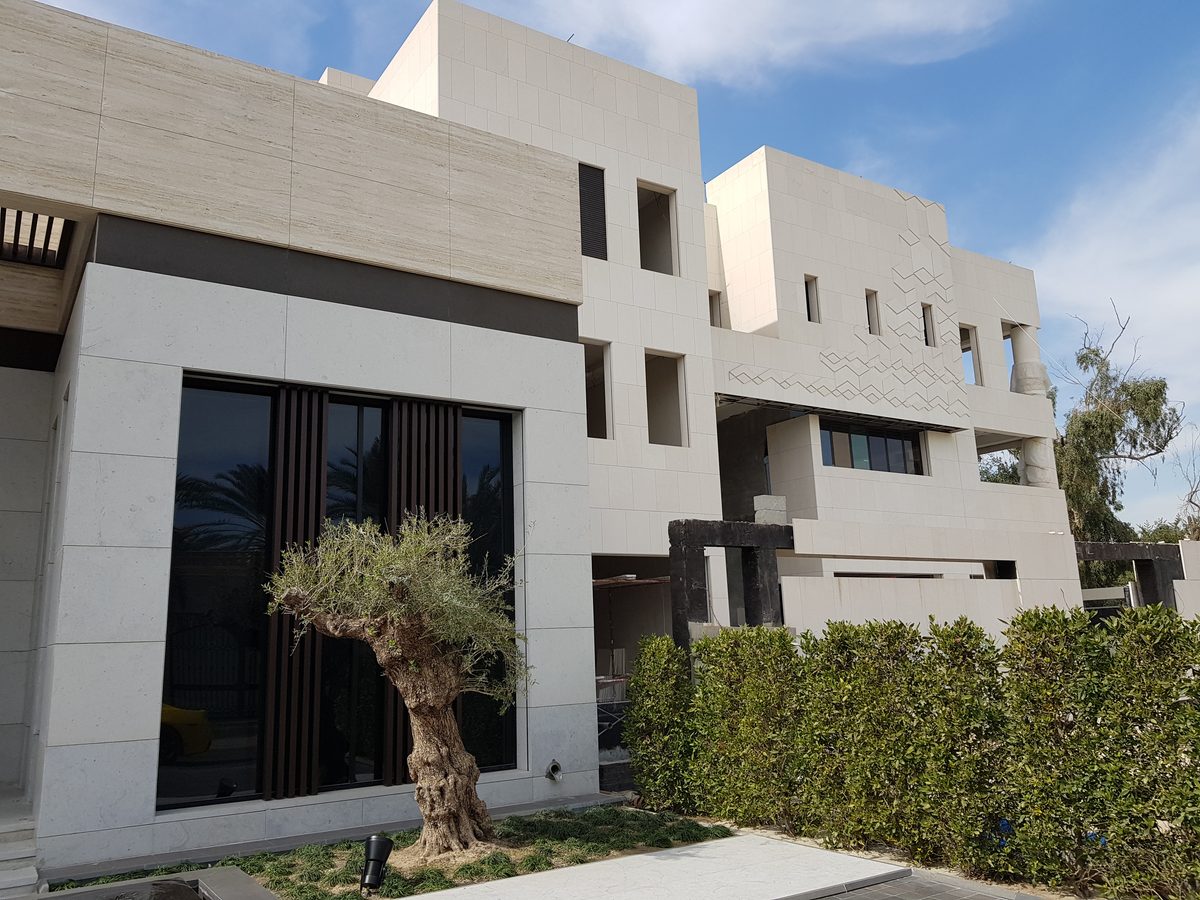
For architects, developers, contractors and natural stone importers, selecting Turkish limestone involves much more than choosing an attractive color. Geological characteristics, stone quality, surface finishes, manufacturing capabilities and supplier reliability all influence the success of a project.
This guide explores the characteristics of Turkish limestone, its architectural applications, available finishes and the essential considerations when sourcing natural stone directly from Türkiye.
What Is Turkish Limestone?
Turkish limestone is a sedimentary natural stone quarried in different regions of Türkiye. It forms primarily through the accumulation and consolidation of calcium-carbonate-rich sediments over geological time.
Its appearance varies depending on the geological formation, mineral composition and extraction location.
Turkish limestone is commonly associated with:
- White, ivory, cream and beige color palettes
- Natural textures ranging from fine-grained to visibly fossiliferous
- Architectural versatility
- Compatibility with different surface treatments
- Fabrication into standard and custom dimensions
- Applications in traditional and contemporary construction
Unlike manufactured materials, natural limestone contains subtle variations that contribute to its distinctive architectural character.
Why Is Turkish Limestone Popular in International Architecture?
The popularity of Turkish limestone is closely connected to its visual qualities, fabrication potential and the experience of Türkiye’s natural stone industry.
1. Timeless Architectural Appearance
Neutral stone colors allow architects to create balanced, elegant environments without relying on excessive decoration.
Light-colored Turkish limestone works particularly well in contemporary architecture, Mediterranean-inspired projects and classical architectural designs.
2. Versatile Fabrication Possibilities
Selected limestone varieties can be manufactured into a wide range of architectural products, including:
- Exterior limestone façade panels
- Interior wall cladding
- Cut-to-size limestone tiles and slabs
- Limestone columns and capitals
- Door and window surrounds
- Decorative balustrades
- Fireplace surrounds
- Limestone stairs
- Pier caps and coping elements
- Custom architectural components
The suitability of a particular limestone for each application must be assessed according to the project’s technical requirements.
3. Custom Production for Architectural Projects
Modern architectural projects frequently require non-standard dimensions, special edge profiles and complex decorative components.
Working with a manufacturer capable of producing limestone according to architectural drawings can simplify material coordination and reduce unnecessary cutting at the construction site.
4. Access to an Established Natural Stone Industry
Türkiye has a long history of natural stone extraction and processing.
This industry supports international buyers looking for natural stone blocks, slabs, finished products and project-specific architectural components.
Turkish Limestone Types: Understanding Limra Limestone
Among Türkiye’s recognized architectural limestone varieties, Limra limestone is particularly associated with the Antalya region, including the Finike area.
Limra limestone is known for its light appearance, which can range from white to warm cream depending on the specific quarry and stone selection.
Its relatively fine-grained visual character makes it attractive for projects requiring architectural continuity across large surfaces.
Common Applications of Limra Limestone
Limra limestone is frequently considered for:
- Residential and commercial façades
- Decorative wall cladding
- Architectural columns
- Window and door frames
- Ornamental stonework
- Fireplace surrounds
- Selected interior architectural applications
However, Limra limestone should not be treated as a single material with identical technical properties across every quarry or production batch.
Water absorption, density, compressive strength and weathering behavior can vary. Designers should request representative samples and relevant test results before specifying material for demanding environments.
Turkish Limestone for Exterior Wall Cladding
Exterior wall cladding is one of the most prominent architectural uses of Turkish limestone.
Natural limestone façades create a refined visual identity while allowing designers to combine contemporary construction methods with traditional stone materials.
Important specification factors include:
Stone selection: Evaluate the consistency of color, texture and visible natural characteristics.
Panel dimensions: Determine the appropriate size and thickness through engineering calculations and façade-system requirements.
Anchoring system: Select mechanical fixing systems compatible with the stone and relevant building standards.
Climate exposure: Assess rainfall, freezing conditions, temperature changes and atmospheric exposure.
Surface finish: Choose a finish that supports the desired architectural appearance and maintenance requirements.
Quality control: Confirm dimensional tolerances and inspect the stone before shipment.
For major developments, the façade engineering team should approve the final stone specification and installation system.
Cut-to-Size Turkish Limestone: From Drawings to Finished Products
Cut-to-size manufacturing is especially valuable when a project requires components manufactured to exact architectural dimensions.
The process generally begins with technical drawings, schedules and project specifications.
Step 1: Review Architectural Requirements
The manufacturer examines product dimensions, thicknesses, quantities, finishes and special details.
Step 2: Select Suitable Stone
Material selection considers visual consistency, intended application and technical suitability.
Step 3: Cutting and Fabrication
Stone is processed into the dimensions and profiles specified for the project.
Step 4: Surface and Edge Finishing
Finishing operations create the required texture, appearance and edge geometry.
Step 5: Quality Inspection
Finished components are checked against agreed specifications, including dimensions and visible quality.
Step 6: Packing and Export Preparation
Products are organized and protected for international transport according to the agreed packing requirements.
For architects and contractors, accurate documentation is essential. Clear drawings and production schedules help prevent misunderstandings during manufacturing.
Popular Finishes for Turkish Limestone
Different finishes can significantly change the visual appearance and functional characteristics of limestone.
| Finish | Appearance | Common Use |
|---|---|---|
| Honed | Smooth, matte surface | Interior walls and selected floors |
| Brushed | Soft, textured surface | Decorative architectural applications |
| Sandblasted | Textured, matte appearance | Selected exterior surfaces |
| Bush-Hammered | Pronounced surface texture | Architectural and landscape features |
| Polished | Reflective surface, where achievable | Decorative interior applications |
| Tumbled | Aged and softened appearance | Traditional and rustic designs |
Finish availability depends on the limestone variety, dimensions and manufacturing equipment.
For walking surfaces, slip-resistance requirements must be assessed separately.
Turkish Limestone vs. Travertine vs. Marble
Architects often compare Turkish limestone with other natural stones.
Although these materials may have similar color palettes, their geological characteristics and visual appearance can differ considerably.
Turkish Limestone
Often selected for elegant façades, custom architectural components and projects requiring neutral natural stone surfaces.
Turkish Travertine
Recognized for characteristic voids, layering and distinctive surface patterns. It is widely used for architectural cladding, flooring and decorative applications.
Turkish Marble
A metamorphic stone valued for its crystalline structure, decorative veining and variety of potential surface finishes.
No single natural stone is automatically the best choice for every application. The final selection should reflect appearance, technical performance, installation design, maintenance and project budget.
How to Choose a Reliable Turkish Limestone Supplier
Selecting the right supplier is critical for international architectural projects.
Before placing an order, architects, contractors and natural stone importers should evaluate several factors.
Manufacturing Capabilities
Can the supplier produce the required dimensions, edge details and architectural shapes?
Stone Availability
Is sufficient material available to maintain visual consistency throughout the project?
Technical Documentation
Can the supplier provide relevant test results, product specifications and representative samples?
Production Quality Control
How are dimensions, appearance and finished components inspected?
Export Experience
Does the supplier understand international packing, shipping documentation and project delivery requirements?
Communication and Project Coordination
Can the manufacturer review architectural drawings, clarify technical details and respond to changes during production?
A lower initial material price does not necessarily represent the lowest total project cost. Delays, replacement materials and site modifications can significantly affect overall procurement expenses.
Turkish Limestone for International Projects
International buyers frequently need stone manufactured according to local construction requirements.
For projects in the United States, United Kingdom, Canada, Europe and other markets, technical specifications should account for local regulations and project standards.
Depending on the application, relevant testing may include:
- Compressive strength
- Water absorption and density
- Flexural strength
- Abrasion resistance
- Freeze-thaw durability
- Slip resistance
Applicable testing standards and acceptance criteria should be determined by the design team. ASTM or EN test methods may be required depending on the project location.
DMR Limestone: Turkish Limestone Manufacturing for Architectural Projects
DMR Limestone supplies natural Turkish limestone for residential, commercial and architectural developments.
The company focuses on project-specific limestone solutions, including custom cut-to-size production and architectural stone components manufactured according to technical drawings.
Its product range includes limestone façade panels, wall cladding, columns, balustrades, fireplace surrounds, door and window frames, slabs, stairs and other architectural elements.
For architects and contractors, the ability to coordinate natural stone products within a broader architectural design can be particularly valuable.
Frequently Asked Questions About Turkish Limestone
Where does Turkish limestone come from?
Turkish limestone is extracted from natural stone deposits in different regions of Türkiye. Limra limestone is particularly associated with the Antalya and Finike area.
Is Turkish limestone suitable for exterior façades?
Many Turkish limestone varieties are used for exterior façades. Suitability depends on the selected stone, environmental exposure, engineering design and installation system.
What colors are available in Turkish limestone?
White, ivory, cream and beige are common architectural choices, although color availability varies by quarry and limestone variety.
Can Turkish limestone be manufactured to custom dimensions?
Yes. Depending on the selected material and manufacturing capabilities, Turkish limestone can be produced as cut-to-size panels, tiles and custom architectural components.
Is Turkish limestone suitable for cold climates?
Some limestone varieties may be suitable for cold climates, but freeze-thaw performance must be verified through relevant testing and project-specific evaluation.
What is Limra limestone?
Limra is a commercially recognized Turkish limestone associated with the Antalya region. It is appreciated for its light coloring and fine-grained appearance.
How do I request a Turkish limestone quotation?
Provide the intended application, drawings, quantities, dimensions, thicknesses, finishing requirements, delivery destination and project schedule.
Conclusion: Choosing Turkish Limestone with Confidence
Turkish limestone offers architects and developers a versatile material for creating elegant, lasting architectural designs.
However, successful natural stone procurement requires careful attention to technical performance, accurate manufacturing, quality control and supplier communication.
Whether the project involves a private villa, luxury hotel, residential development or commercial façade, selecting an experienced manifaturana partner helps connect architectural vision with practical production requirements.
Planning a project with Turkish limestone?
Visit DMR Limestone to explore limestone products, architectural applications and custom cut-to-size manufacturing solutions.
Contact the DMR Limestone team with your project drawings and specifications to discuss material selection and production requirements.

Related Posts

Comments (0)