
Finding a reliable Turkish limestone manufacturer is an important step for architects, construction companies, natural…

Why Turkish Limestone Is Chosen for Luxury Architectural Projects
Luxury architecture is defined not only by the materials used, but also by how those materials interact with light, space, proportion and the surrounding landscape.
Turkish limestone offers architects a natural stone palette for creating refined residential, hospitality and commercial environments. Its subtle colours, visual texture and custom fabrication potential make it a compelling choice for projects where architectural consistency and carefully executed details are essential.
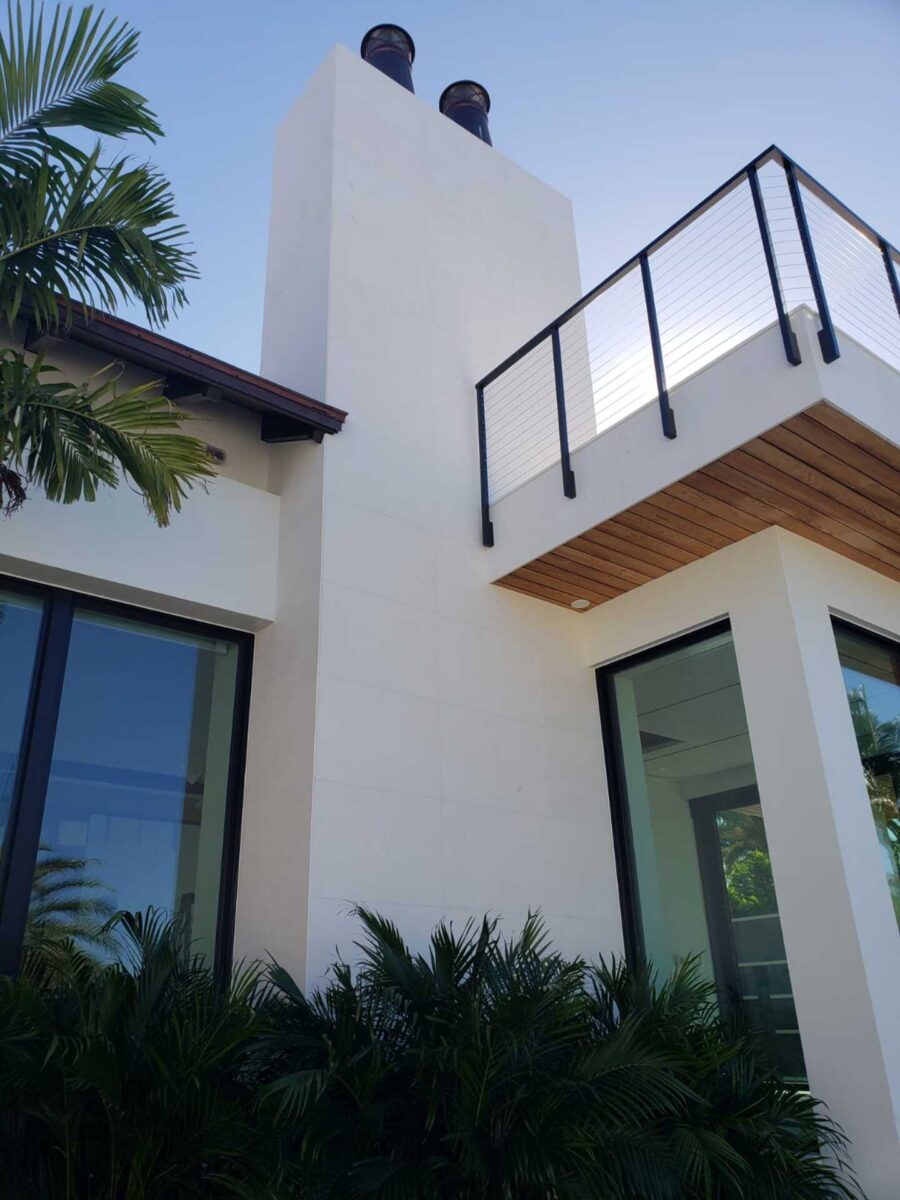
From contemporary villas with minimalist façades to Mediterranean estates, boutique hotels and exclusive resorts, Turkish limestone can become a central element of the architectural design.
In this article, we explore how limestone contributes to luxury architecture, where it creates the strongest visual impact and how designers can coordinate natural stone across an entire project.
What Makes Turkish Limestone Suitable for Luxury Architecture?
Turkish limestone is selected for luxury architecture because certain varieties combine restrained natural colours, subtle geological character and the ability to be fabricated into project-specific architectural components.
Unlike decorative finishes that are applied only to individual surfaces, limestone can be incorporated into the broader architectural composition.
For example, an architect may specify a coordinated stone palette for an entrance, selected exterior walls, staircases, window surrounds and landscape features.
This allows the stone to become part of the building’s architectural identity rather than simply an applied finish.
The perceived quality of the result depends on several factors:
- Material selection and colour coordination
- Architectural proportions
- Surface finish consistency
- Precision of fabrication
- Joint alignment and detailing
- Appropriate installation
- Integration with surrounding materials
Premium architecture is achieved through the quality of the complete design, not by choosing an expensive material alone.
1. Turkish Limestone Creates a Refined Architectural Identity
One of the principal attractions of limestone is its restrained visual character.
White, ivory, cream and beige limestone selections can provide a calm architectural background while allowing other elements to remain visually prominent.
A light limestone wall, for instance, can create contrast with dark aluminium window frames without overwhelming the composition.
Similarly, warm beige stone may complement timber entrances, bronze details and landscaped courtyards.
Contemporary Minimalist Architecture
Modern luxury residences frequently use clean geometry, generous glazing and carefully controlled material transitions.
Limestone can support this style through:
- Large, regularly proportioned stone panels
- Recessed entrances
- Simple rectangular openings
- Consistent horizontal or vertical joints
- Minimal decorative detailing
- Coordinated wall and landscape materials
For such projects, the quality of the panel layout is often more important than ornamentation.
An organised stone module can reinforce the architectural proportions and reduce unnecessary visual complexity.
Explore Limestone Villa Facades for contemporary and custom residential stone applications.
Mediterranean Luxury Architecture
Mediterranean-inspired residences often use warm materials, shaded terraces and architectural elements that connect indoor and outdoor living.
Cream or beige limestone can complement:
- Timber pergolas
- Arched entrances
- Courtyards
- Natural garden planting
- Terracotta finishes
- Traditional roof forms
- Decorative stone surrounds
Where a contemporary residence may rely on flat stone surfaces, Mediterranean architecture often introduces more pronounced edges, reveals and architectural profiles.
The goal is not simply to add decoration, but to establish coherent relationships between materials, openings and building proportions.
2. Limestone Allows Architects to Create Material Continuity
Material continuity is an important design principle in high-end architecture.
A building can feel more cohesive when its entrance, exterior surfaces and surrounding landscape share a consistent architectural language.
Turkish limestone offers the possibility of coordinating multiple components using compatible stone selections.
Consider a luxury villa where the exterior walls feature light-coloured limestone.
The architect may extend that material identity through matching entrance steps, window surrounds, garden walls and selected terrace features.
The outcome is a design in which the architecture and landscape feel connected.
Coordinating Different Architectural Zones
| Architectural zone | Limestone application | Design objective |
|---|---|---|
| Main entrance | Custom portal and steps | Establish a distinctive arrival experience |
| Exterior elevations | Wall cladding and façade panels | Create consistent architectural proportions |
| Windows | Sills and surrounds | Integrate openings into the stone composition |
| Outdoor terraces | Paving and wall details | Connect interior and exterior spaces |
| Pool environment | Coping and complementary stonework | Coordinate the outdoor living area |
| Garden boundaries | Wall caps and pier caps | Extend the architectural language |
Importantly, visual consistency does not mean every product must use the same finish or thickness.
Exterior paving and vertical wall panels have different functional requirements. Stone selection and surface treatment should reflect those differences.
Architects can explore custom solutions through DMR Limestone Architectural Stone Elements.
3. Turkish Limestone for Luxury Villa Design
Private residences provide an opportunity to use natural stone as an architectural feature across multiple scales.
In a luxury villa, limestone may appear in large exterior surfaces, carefully shaped entrance details or smaller decorative components.
The selection depends on the architect’s design philosophy and the intended experience of the home.
The Architectural Entrance
The main entrance establishes the first impression of a property.
A limestone entrance portal can frame the doorway and strengthen the sense of arrival.
For minimalist villas, a simple stone surround with deep reveals may be sufficient.
For classical residences, the composition may include columns, mouldings or carved architectural elements.
In both cases, custom dimensions and accurate fabrication are important to achieving the intended result.
Large Exterior Wall Surfaces
Broad limestone surfaces can create a visually unified building envelope.
Rather than treating each wall independently, architects can establish panel proportions that relate to windows, floor levels and structural features.
This approach can produce a more intentional façade composition.
However, large exterior panels require appropriate engineering, verified stone properties and a suitable fixing design.
The Relationship Between the Villa and Landscape
Outdoor living spaces are often central to luxury residential projects.
Limestone can provide material continuity between a residence and surrounding terraces, courtyards, gardens and pool structures.
For example, a villa may combine natural stone wall cladding with complementary paving and custom garden wall details.
This creates a coherent design without requiring identical finishes across every application.
4. Limestone in Luxury Hotels and Resorts
Hospitality architecture presents a different design challenge from private residential architecture.
Hotels and resorts must create a recognisable atmosphere while accommodating repeated spaces, intensive use and ongoing maintenance.
Natural limestone can contribute to the design of entrances, reception areas, façades, courtyards and landscape elements.
Creating an Arrival Experience
The approach to a luxury hotel frequently establishes the visual identity of the property.
A carefully detailed stone entrance may incorporate:
- Architectural wall surfaces
- Custom columns
- Reception-facing feature walls
- Stone steps
- Entrance surrounds
- Decorative elements
The effect should reflect the hotel’s broader architectural concept.
Connecting Hospitality Spaces
Large resorts may include multiple buildings, restaurants, pools, spas and guest villas.
Coordinated stone selections can help visually connect these separate areas.
For example, similar limestone tones might appear in the main hotel entrance, guest-villa exterior details and landscaped circulation areas.
Different finishes and construction details can then be selected according to each location’s functional requirements.
Balancing Appearance and Maintenance
Hospitality projects must consider the practical demands of natural stone.
Areas exposed to heavy pedestrian traffic, food service, pool chemicals or frequent cleaning may require different material specifications.
Stone finishes, protective treatments and maintenance procedures should be selected in consultation with the relevant project professionals.
A visually appealing material is not automatically suitable for every high-traffic environment.
5. How Turkish Limestone Works with Other Luxury Materials
Luxury architecture often relies on a limited group of carefully coordinated materials.
Turkish limestone can be combined with metal, glass, timber and other architectural finishes to create different design effects.
Limestone and Glass
The contrast between natural stone and transparent glazing can be particularly effective in contemporary architecture.
Solid stone surfaces establish visual weight, while glass introduces openness and natural light.
This combination is often used in villas with large windows and visually restrained façades.
Limestone and Natural Timber
Timber introduces warmth, grain and texture.
When combined with light limestone, it can soften contemporary architecture and create a more welcoming material palette.
This approach may be appropriate for residential entrances, sheltered terraces and selected interior features.
Limestone and Dark Metal
Black, charcoal or bronze-coloured metal frames can provide a strong contrast against pale limestone.
Such combinations can emphasise openings, architectural lines and geometric detailing.
Limestone and Architectural Lighting
Lighting is essential in revealing the three-dimensional character of stone.
Directional lighting may emphasise carved profiles, deep window reveals or textured feature walls.
Grazing light can reveal natural texture, but it may also expose surface and installation irregularities.
For this reason, lighting positions and stone mock-ups should be coordinated during the design process.
6. Custom Limestone Details Make Architectural Designs Distinctive
Standard stone products are suitable for many construction applications.
However, complex architectural projects may require components manufactured specifically for the building.
Custom limestone fabrication allows designers to develop details that respond to the geometry and proportions of the architecture.
Possible components include:
- Deep window surrounds
- Custom entrance frames
- Curved architectural features
- Decorative columns
- Profiled cornices
- Carved stone panels
- Bespoke stair components
- Architectural fireplace surrounds
The precision of these components can influence the overall quality of the completed project.
A carefully fabricated entrance surround, for example, can establish clean transitions between adjoining materials.
Why Drawings Matter
Custom natural stone manufacturing should begin with accurate technical information.
Architectural drawings help define:
- Overall dimensions
- Visible surface requirements
- Profile geometry
- Connection details
- Joint positions
- Fabrication tolerances
- Stone orientation
- Identification of individual pieces
Three-dimensional models, physical samples and mock-ups can also help resolve complex details before production.
DMR Limestone provides project-based natural stone manufacturing, including custom fabrication for architectural components.
Discover its Architectural Stone Manufacturing Capabilities.
7. Does Limestone Automatically Make a Building Look More Luxurious?
No. Natural limestone can support a premium architectural appearance, but the result depends on how the material is designed and executed.
Poorly coordinated joints, inconsistent colour selection, unsuitable detailing or careless installation can undermine an otherwise well-conceived project.
Conversely, a relatively restrained use of limestone can create a sophisticated result when the material is placed thoughtfully.
For architects, the most important considerations include:
Proportion: Stone elements should relate coherently to the building’s overall geometry.
Visual balance: Material transitions should feel intentional rather than arbitrary.
Detailing: Corners, openings and terminations require careful design.
Colour coordination: Natural variation should be anticipated and managed.
Execution: Fabrication and installation should reflect the approved design.
Luxury architecture benefits from precision and restraint as much as from material selection.
8. Choosing a Turkish Limestone Partner for Premium Projects
Architects and developers working on high-end projects often need more than a supplier of standard stone products.
Complex buildings may require a manufacturing partner capable of interpreting drawings, coordinating material selections and producing custom components.
When assessing a potential stone manufacturer, it is useful to consider:
- Experience with architectural stone fabrication
- Ability to work from approved project drawings
- Availability of representative samples
- Communication during technical coordination
- Manufacturing and quality-control procedures
- Export packaging and piece identification
- Capacity to support multiple architectural product categories
Where a project combines wall cladding, steps, window surrounds and decorative elements, coordinated production can simplify design communication and procurement.
The manufacturer should also be transparent about material limitations and the information required to confirm technical suitability.
9. DMR Limestone: Architectural Stone Manufacturing from Türkiye
DMR Limestone manufactures and supplies Turkish limestone for residential, commercial and architectural projects worldwide.
The company works with selected natural limestone materials and produces project-specific components according to approved drawings and requirements.
For luxury architecture, its manufacturing scope includes:
- Custom limestone façade components
- Architectural wall cladding
- Door and window surrounds
- Columns and capitals
- Limestone stairs
- Balustrades
- Fireplace surrounds
- Landscape stone elements
- CNC-fabricated architectural details
DMR Limestone supports architects, contractors, importers and natural stone professionals seeking coordinated solutions for demanding projects.
Through project-specific manufacturing and technical communication, the company helps translate architectural stone concepts into fabricated components ready for project delivery.
Frequently Asked Questions
Why do architects choose Turkish limestone for luxury villas?
Architects may choose Turkish limestone for its natural neutral colours, compatibility with contemporary and traditional design, and ability to be fabricated into coordinated architectural components. The selected material must also meet the project’s technical requirements.
Is Turkish limestone suitable for modern luxury homes?
Yes. Light-coloured Turkish limestone can complement modern architectural features such as large glazing, simple geometric forms, recessed openings and minimalist detailing.
Can limestone be used throughout a luxury property?
Yes. Limestone can be incorporated into façades, entrance elements, interior features and landscaping. However, each application may require different dimensions, surface finishes and technical specifications.
Is natural limestone appropriate for luxury hotels?
Selected limestone can be suitable for hotel façades, lobbies, entrances and other architectural features. High-traffic areas and exposed environments require application-specific material evaluation and maintenance planning.
Can Turkish limestone be combined with glass and metal?
Yes. Light limestone can provide a contrasting natural material alongside glass façades, aluminium window frames, bronze details and other contemporary architectural finishes.
Does limestone increase property value?
Natural stone may contribute to the perceived quality and market appeal of a property. However, any increase in financial value depends on location, design, construction quality, buyer preferences and broader real-estate market conditions.
Can architects order custom limestone architectural elements?
Yes. DMR Limestone manufactures custom architectural stone components according to approved project drawings, material selections and production requirements.
Bring Your Architectural Vision to Life with DMR Limestone
Exceptional architecture begins with thoughtful design, carefully selected materials and attention to detail.
Whether the project is a contemporary luxury villa, an exclusive resort, a boutique hotel or a distinctive commercial building, Turkish limestone offers opportunities to create coherent architectural environments with natural character.
DMR Limestone works with architects, developers, contractors and international stone buyers to manufacture custom limestone products that respond to the needs of individual projects.
Explore our Luxury Limestone Villa Facades, discover Custom Architectural Stone Elements, or visit DMR Limestone to discuss your next architectural project.
Share your project drawings, material preferences and technical requirements to request a custom limestone quotation.

Related Posts
Comments (0)