
Luxury architecture is defined not only by the materials used, but also by how those…
Turkish Limestone Manufacturers: How to Choose a Reliable Supplier
Finding a reliable Turkish limestone manufacturer is an important step for architects, construction companies, natural stone importers and distributors sourcing materials for international projects.
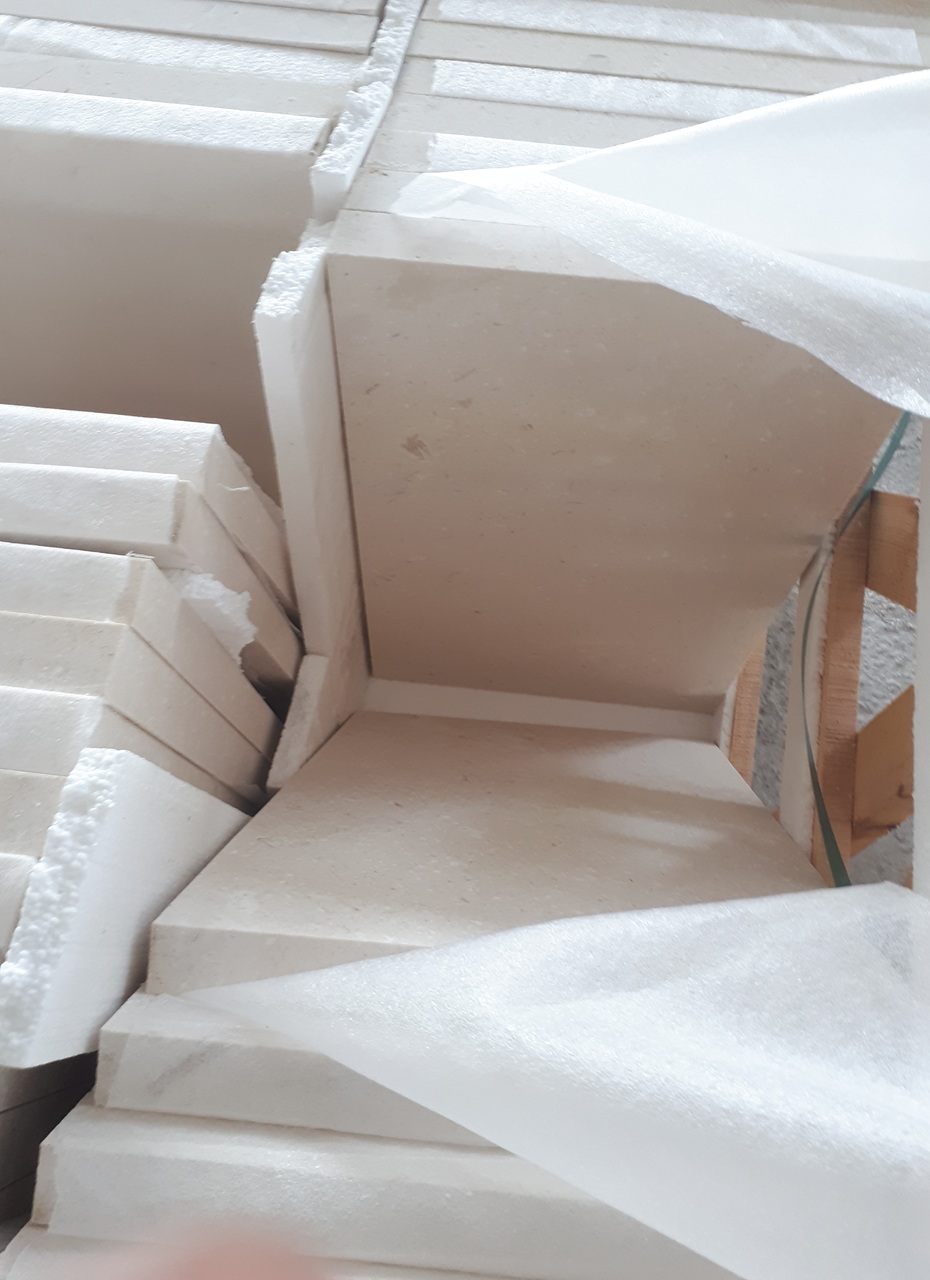
Türkiye has an established natural stone industry, with manufacturers offering everything from standard limestone slabs and tiles to precision-cut façade panels and complex architectural components.
However, not every limestone supplier provides the same manufacturing capabilities, technical coordination, quality-control procedures or export services.
A reliable Turkish limestone manufacturer should be evaluated on material traceability, production capability, sample approval, dimensional accuracy, documented quality controls, export packaging and the ability to meet project-specific requirements.
This guide explains how international buyers can evaluate limestone manufacturers in Türkiye and reduce procurement risks before placing an order.
1. What Is the Difference Between a Limestone Manufacturer and a Supplier?
The terms limestone manufacturer, limestone supplier and limestone exporter are sometimes used interchangeably, but they can describe different business models.
Understanding these distinctions helps buyers identify the right partner for their requirements.
Limestone Manufacturer
A limestone manufacturer is responsible for producing or processing natural stone products.
Manufacturing activities may include:
- Block cutting and slab processing
- Thickness calibration
- Precision cutting
- Surface finishing
- Edge profiling
- CNC machining
- Custom architectural fabrication
- Dimensional inspection
- Product preparation and packaging
Some manufacturers own their production facilities, while others coordinate specialised manufacturing operations.
Buyers should clarify which activities are performed directly and which are subcontracted.
Limestone Supplier
A limestone supplier primarily focuses on sourcing and supplying material.
Some suppliers maintain inventories of standard limestone products, while others procure material from several quarries or manufacturers.
A supplier may be appropriate for straightforward product orders, particularly when fabrication is completed locally after import.
Limestone Exporter
A limestone exporter organises the international sale and movement of stone products.
Export responsibilities may include preparing commercial documents, arranging packaging, coordinating transport and communicating with overseas buyers.
A single company may act as manufacturer, supplier and exporter.
The important distinction is not the company’s title, but its actual responsibilities and ability to fulfil the order.
2. Seven Essential Criteria for Choosing Turkish Limestone Manufacturers
Before selecting a manufacturing partner, buyers should assess the following areas.
| Evaluation criterion | What buyers should verify |
|---|---|
| Material sourcing | Limestone identity, selection availability and consistency |
| Manufacturing | Cutting, finishing, profiling and custom production capabilities |
| Technical coordination | Ability to interpret drawings, schedules and tolerances |
| Samples | Representative material and finish approval procedures |
| Quality control | Inspection records and agreed acceptance criteria |
| Export packaging | Protection, identification and transport suitability |
| Communication | Clear documentation, revision management and delivery coordination |
A manufacturer does not need to be the largest company in the market to be the right partner.
For complex architectural projects, technical competence and production coordination can be more valuable than catalogue size alone.
3. Verify Limestone Material Sourcing and Availability
Limestone is a natural material, and visual characteristics can vary between quarries, blocks and production batches.
Before confirming a large order, buyers should establish exactly which limestone selection is being quoted.
Important questions include:
- What is the commercial material name?
- Where is the stone sourced?
- Is the quoted selection currently available?
- Can representative samples be supplied?
- What degree of natural colour variation should be expected?
- Can future production quantities be sourced from compatible material?
- Is technical documentation available for the proposed selection?
These questions become especially important for multi-building developments and projects with phased deliveries.
Material Consistency Across Larger Orders
A small physical sample cannot represent every natural variation that may appear in a large limestone order.
For major projects, a manufacturer may prepare a representative colour-range sample set showing acceptable variations.
This allows the architect and buyer to establish visual approval criteria before production.
Where visual consistency is particularly important, material selection and batch allocation should be coordinated in advance.
Buyers should also clarify whether the quotation covers a specific stone selection or permits substitution with another material.
4. Evaluate Cut-to-Size Manufacturing Capabilities
Custom cut-to-size limestone is an important product category for international architectural projects.
Unlike standard tiles or slabs, cut-to-size products are manufactured according to approved dimensions and fabrication instructions.
These products may include:
- Exterior limestone wall panels
- Custom façade components
- Interior flooring layouts
- Limestone window sills
- Stair treads and risers
- Door surrounds
- Wall caps and coping
- Custom-shaped architectural stone
Why Dimensional Accuracy Matters
A dimensional error can create substantial problems during installation.
For example, incorrectly fabricated stone window sills may not align with prepared openings, waterproofing details or adjoining façade components.
For façade panels, errors in dimensions or fixing preparation may affect the intended installation system.
Therefore, buyers should establish agreed tolerances before manufacturing begins.
A good quotation should identify the relevant dimensions, thicknesses, finishes and special fabrication requirements.
Manufacturing from Technical Drawings
Professional architectural stone manufacturers should be able to review clearly prepared production documents.
Depending on the project, these may include:
- PDF drawings
- DWG or DXF files
- Stone cutting lists
- Excel schedules
- Shop drawings
- Approved profiles
- Three-dimensional models
- Physical templates
The project team should confirm which documents are approved for production and how revisions will be controlled.
DMR Limestone supports custom limestone manufacturing from approved project drawings, dimensional schedules and relevant technical documentation.
5. Assess Custom Architectural Stone Production
Not all Turkish limestone manufacturers specialise in complex architectural components.
Some focus primarily on slabs, tiles or paving products.
Others offer specialised fabrication for architectural features that require additional machining, profiling or carving.
Custom architectural products may include:
- Limestone columns and capitals
- Decorative cornices
- Architectural arches
- Carved stone panels
- Balustrades
- Fireplace surrounds
- Window and door frames
- Curved limestone elements
- Restoration-style components
CNC Manufacturing and Custom Profiles
Computer numerical control (CNC) machining can be used to produce complex stone geometries based on digital designs.
However, the presence of CNC equipment alone does not guarantee successful architectural fabrication.
The manufacturer must also understand:
- Stone geometry
- Material limitations
- Tool access
- Minimum practical sections
- Edge protection
- Assembly requirements
- Dimensional inspection
For architectural work involving complex profiles or repeated decorative elements, buyers should request relevant examples or a sample fabrication.
Explore Custom Architectural Stone Elements by DMR Limestone to learn about project-specific manufacturing options.
6. Request Samples Before Confirming Production
Sample approval is one of the most effective ways to reduce uncertainty when purchasing natural stone internationally.
Buyers should distinguish between several different sample types.
Material Samples
Material samples help establish the general appearance, colour and texture of the proposed limestone.
Surface-Finish Samples
Finish samples show the appearance of the selected manufacturing treatment.
A honed surface may look substantially different from a brushed or sandblasted surface of the same limestone.
Colour-Range Samples
A colour-range set can demonstrate the natural variation likely to appear across a larger production batch.
Profile Samples
Profile samples help confirm the dimensions and visual appearance of custom edges, mouldings and architectural details.
Full-Size Mock-Ups
For selected projects, full-size or representative mock-ups may be required to evaluate joints, edge details, panel arrangements or connections.
Buyers should retain a clearly identified approved sample as a reference for production inspection and final acceptance.
Photographs can support communication, but they should not automatically replace physical material approval where colour and texture are critical.
7. Understand Limestone Quality Control
Natural stone quality control involves more than inspecting the appearance of finished products.
A suitable inspection plan should reflect the material, fabrication scope and intended application.
Incoming Material Inspection
Before processing, the manufacturer may inspect limestone blocks or slabs for visible defects, unsuitable areas and consistency with the selected material.
Production Inspection
During manufacturing, inspection may address:
- Dimensions
- Thickness
- Surface finish
- Edge profiles
- Drilling and slots
- Visible damage
- Product identification
- Conformity with drawings
Final Inspection
Before packaging, finished products should be checked against agreed specifications and acceptance criteria.
For complex orders, inspection records, photographs or third-party inspections may be requested.
Technical Testing
Where a building specification requires particular performance values, the buyer should identify the appropriate test methods and acceptance limits.
Depending on the application, relevant properties may include water absorption, flexural strength, compressive strength, freeze–thaw resistance and slip resistance.
International test requirements vary by project and destination.
Buyers should not assume that a generic limestone certificate automatically establishes suitability for every use.
8. Why Export Packaging Matters
Limestone is heavy, and many architectural components have edges or profiles that can be vulnerable during handling.
Export packaging must therefore be considered part of the procurement specification.
Depending on the product, appropriate packaging may involve:
- Reinforced wooden crates
- Pallets
- Protective separators
- A-frame supports
- Edge protection
- Custom supports for curved pieces
- Individual identification labels
- Crate manifests
Packaging should reflect the dimensions, weight, fragility and intended transport method of each product.
Project-Based Packaging
Custom architectural projects may benefit from packaging organised by installation area.
For example, limestone components can be grouped according to:
- Building
- Floor
- Elevation
- Room
- Villa number
- Staircase
- Pool area
- Installation phase
Clearly labelled crates can simplify unloading and help contractors identify the correct components.
Piece Numbering
Piece numbering is particularly valuable for custom manufactured stone.
A unique code can connect an individual stone component with the relevant drawing, schedule and packing list.
This reduces confusion when multiple similar components have slightly different dimensions.
DMR Limestone offers project-area packaging and piece-numbering coordination for custom architectural limestone orders.
Learn more about its Limestone Manufacturing and Export Services.
9. How to Compare Quotations from Turkish Limestone Suppliers
The lowest quoted unit price does not necessarily represent the lowest total project cost.
A quotation may exclude essential fabrication, packaging or delivery services.
Before comparing suppliers, buyers should confirm that all quotations cover equivalent requirements.
| Quotation item | Questions to ask |
|---|---|
| Stone selection | Is the same limestone grade or approved material included? |
| Product dimensions | Are the same sizes and thicknesses quoted? |
| Surface finish | Is the specified finish included? |
| Custom fabrication | Are holes, grooves, profiles and machining included? |
| Packaging | Are export crates and protection included? |
| Quantity | Are waste allowance and spare pieces addressed? |
| Delivery terms | Which Incoterms rule and named place apply? |
| Lead time | Does the period include production and packaging? |
| Documentation | Which technical and export documents are provided? |
For accurate comparison, request an itemised offer rather than relying on a single total price.
Understanding EXW, FOB and CIF
International limestone quotations may use commercial delivery terms such as EXW, FOB or CIF.
EXW (Ex Works): The seller makes the goods available at the named location under the agreed terms.
FOB (Free on Board): For sea or inland-waterway transport, the seller delivers the goods on board the vessel at the named port of shipment.
CIF (Cost, Insurance and Freight): The seller arranges and pays for carriage and required insurance to the named destination port, although the risk transfers earlier, when the goods are on board at the port of shipment.
These terms allocate responsibilities differently and should be understood before selecting a quotation.
The agreed Incoterms version and named location should be written into the commercial documents.
10. Common Mistakes When Importing Limestone from Turkey
International buyers can reduce avoidable problems by addressing several common procurement mistakes.
Choosing Solely on Price
A lower quotation may reflect differences in material selection, thickness, fabrication or packaging.
Always compare equivalent specifications.
Approving Stone Only from Photographs
Screen colours and lighting conditions can distort the appearance of limestone.
Representative physical samples help establish realistic expectations.
Sending Incomplete Drawings
Missing dimensions, profiles or revision details can delay manufacturing and lead to incorrect assumptions.
Failing to Define Acceptable Variation
Natural limestone is not visually identical from piece to piece.
Agreed reference samples and colour-range criteria are preferable to vague descriptions such as “perfectly uniform.”
Ignoring Packaging Requirements
Transport damage can create additional costs, particularly when replacement components must be manufactured and shipped internationally.
Not Confirming Production Lead Time
A quoted manufacturing period should be distinguished from total delivery time, which may also include sampling, approvals, transport and customs clearance.
11. Turkish Limestone Supply for the USA, Canada, Australia and the UK
International limestone buyers should confirm that the selected products meet the technical and documentary requirements of the destination market.
Requirements vary according to the application and project location.
United States
Buyers may need material test information, imperial-dimension coordination and documentation appropriate to the specified construction application.
Project requirements should be confirmed with the architect, engineer or responsible specification professional.
Canada
Canadian projects may require particular attention to moisture exposure and freeze–thaw performance.
Dimensions may be provided in metric or imperial units, but one approved manufacturing basis should be established.
Discover Turkish Limestone Supply for Canada.
Australia
Australian importers should review project specifications, stone performance, applicable requirements and import procedures before procurement.
Packaging and timber-related import requirements should also be verified with the relevant authorities and shipping providers.
United Kingdom
UK projects may require relevant material declarations, technical information and conformity documentation according to the product’s intended application.
The applicable regulatory route should be verified for the specific product and project.
International buyers should always confirm current destination-specific requirements rather than assuming that one export documentation package is suitable for every country.
12. Why Work with DMR Limestone?
DMR Limestone is a Turkish limestone manufacturer and supplier providing natural stone products for international architectural and construction projects.
The company supports both standard limestone requirements and custom architectural production.
Its manufacturing and supply scope includes:
- Turkish natural limestone
- Limra limestone
- White and beige limestone selections
- Cut-to-size stone products
- Limestone façade panels
- Wall cladding
- Exterior paving
- Pool coping
- Custom limestone window sills
- Stair components
- Architectural columns and capitals
- Balustrades and cornices
- CNC-fabricated stone elements
DMR Limestone also provides project-based services relating to approved drawings, samples, dimensional coordination, quality-control references, piece identification and export packaging.
Manufacturing Support for International Buyers
Architects, contractors and importers can submit their technical requirements for a project-specific manufacturing review.
Depending on the order, this may include material selection, manufacturing feasibility, sample preparation, cutting-list coordination and packaging planning.
See Limestone Window Sills for an example of the company’s custom architectural product range.
Frequently Asked Questions About Turkish Limestone Manufacturers
How do I find a reliable Turkish limestone manufacturer?
Evaluate material sourcing, manufacturing capabilities, sample availability, dimensional accuracy, quality-control procedures, export packaging and communication. Request technical information and a detailed quotation before ordering.
What should I ask a limestone supplier before placing an order?
Ask about the exact stone selection, dimensions, finishes, production tolerances, samples, testing requirements, lead time, packaging, delivery terms and payment conditions.
Can Turkish limestone manufacturers produce custom dimensions?
Yes. Manufacturers with cut-to-size capabilities can produce stone according to approved drawings and schedules, subject to material and production limitations.
Do Turkish limestone manufacturers supply architectural components?
Some manufacturers offer specialised fabrication for columns, window surrounds, cornices, staircases and decorative stone elements. Buyers should verify the supplier’s actual fabrication capabilities.
Can I order Turkish limestone for a project in the USA or Canada?
Yes. Turkish limestone can be sourced for North American projects, provided material selection, technical documentation, dimensions, import procedures and project-specific requirements are properly coordinated.
Is buying directly from a limestone manufacturer better than using a distributor?
Direct manufacturing relationships may provide greater control over custom specifications, while distributors may offer local inventory, shorter local delivery and additional services. The best option depends on the project’s requirements.
Can DMR Limestone manufacture products from CAD drawings?
Yes. DMR Limestone supports manufacturing based on approved drawings, including suitable CAD files, cutting lists and dimensional schedules.
Does DMR Limestone provide export packaging?
Yes. DMR Limestone offers export-oriented packaging and project-specific identification options depending on product dimensions, handling requirements and the commercial agreement.
Request a Quotation from a Turkish Limestone Manufacturer
Whether you are importing limestone for distribution, sourcing façade panels for a commercial building or commissioning custom architectural stonework, successful procurement begins with clear specifications and a qualified manufacturing partner.
DMR Limestone works with architects, contractors, natural stone distributors and international buyers to manufacture Turkish limestone products according to project requirements.
To request a quotation, provide:
- Product type and intended application
- Preferred limestone selection
- Dimensions and thicknesses
- Surface finish
- Required quantity
- Architectural drawings or cutting lists
- Delivery country and destination
- Expected project schedule
Our team can review your requirements and discuss suitable limestone manufacturing options.
Explore DMR Limestone Manufacturing Capabilities
View Custom Architectural Limestone Products
Contact DMR Limestone to Request Samples and Pricing
DMR Limestone — Turkish Limestone Manufacturing for International Architectural Projects.

Related Posts

Comments (0)